Please briefly explain why you feel this question should be reported.

Please briefly explain why you feel this answer should be reported.

Please briefly explain why you feel this user should be reported.

Sign InSign Up

AccountingQA

AccountingQA Logo AccountingQA Logo

AccountingQA Navigation

  • Home
  • Ask Questions
  • Write Answers
  • Explore
  • FAQs
Search
Ask A Question

Mobile menu

Close
Ask a Question
  • Home
  • Questions
    • Most Visited
    • Most Active
    • Trending
    • Recent
  • Follow
    • Categories
    • Users
    • Tags
  • Write an Answer
  • Badges & Points
  • Request New Category
  • Send a Suggestion
  • Search Your Accounting Question..

  • Recent Questions
  • Most Answered
  • Answers
  • Most Visited
  • Most Voted
  • No Answers

AccountingQA Latest Questions

Manvi
Manvi
In: 1. Financial Accounting > Ledger & Trial Balance

How to show sales return in trial balance?

  • 1 Answer
  • 0 Followers
Answer
  1. Simerpreet Helpful CMA Inter qualified
    Added an answer on July 28, 2021 at 3:34 pm
    This answer was edited.

    Sales Return is shown on the debit side of the Trial Balance. Sales Return is also called Return Inward. Sales Return refers to those goods which are returned by the customer to the seller of the goods. The goods can be returned due to various reasons. For example, due to defects, quality differenceRead more

    Sales Return is shown on the debit side of the Trial Balance.

    Sales Return is also called Return Inward.

    Sales Return refers to those goods which are returned by the customer to the seller of the goods. The goods can be returned due to various reasons. For example, due to defects, quality differences, damaged products, and so on.

    In a business, sales is a form of income as it generates revenue. So, when the customer sends back those goods sold earlier, it reduces the income generated from sales and hence goes on the debit side of the trial balance as per the modern rule of accounting Debit the increases and Credit the decreases.

    For Example, Mr. Sam sold goods to Mr. John for Rs 500. Mr. John found the goods damaged and returned those goods to Mr. Sam.

    So, here Sam is the seller and John is the customer.

    The journal entry for sales return in the books of Mr. Sam will be

    Particulars Amt Amt
    Sales Return A/c 500
         To Mr John 500

    Treatment in Trial Balance

    See less
    • 0
    • Share
      Share
      • Share on Facebook
      • Share on Twitter
      • Share on LinkedIn
      • Share on WhatsApp
A_Team
A_Team
In: 1. Financial Accounting > Miscellaneous

What are some examples of fictitious asset?

  • 1 Answer
  • 0 Followers
Answer
  1. Vijay Curious M.Com
    Added an answer on July 28, 2021 at 2:40 pm
    This answer was edited.

    Fictitious assets are not actually assets. They are expenses/losses not written off in the year in which they are incurred. They do not have any physical presence. Their expense is spread over more than one accounting period. A part of the expense is amortized/written off every year against the compRead more

    Fictitious assets are not actually assets. They are expenses/losses not written off in the year in which they are incurred. They do not have any physical presence. Their expense is spread over more than one accounting period.

    A part of the expense is amortized/written off every year against the company’s earnings. The remaining part (which is yet to be written off) is shown as an asset in the balance sheet. They are shown as assets because these expenses are expected to give returns to the company over a period of time.

    Here are some examples of fictitious assets:

    • Preliminary expenses.
    • Promotional expenses.
    • Loss incurred on the issue of debentures.
    • Underwriting commission.
    • Discount on issue of shares.


    To make it simple I’ll explain the accounting treatment of preliminary expenses with an example.

    The promoters of KL Ltd. paid 50,000 as consultation fees for incorporating the company. The consultation fee is a preliminary expense as they are incurred for the formation of the company. The company agreed to write off this expense over a period of 5 years.

    At the end of every year, the company will write off 10,000 (50,000/5) as an expense in the Profit & Loss A/c.

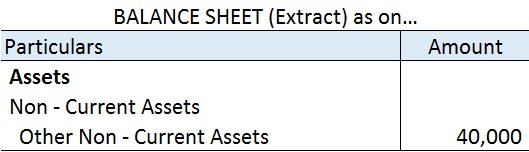
    The remaining portion i.e. 40,000 (50,000 – 10,000) will be shown on the Assets side of the Balance Sheet under the head Non – Current Assets and sub-head Other Non – Current Assets. 

    Here are the financial statements of KL Ltd.,

    Note: As per AS 26 preliminary expenses are fully written off in the year they are incurred. This is because such expenses do not meet the definition of assets and must be written off in the year of incurring.

    Source: Some fictitious assets examples are from Accountingcapital.com & others from Wikipedia.


    See less
    • 0
    • Share
      Share
      • Share on Facebook
      • Share on Twitter
      • Share on LinkedIn
      • Share on WhatsApp
A_Team
A_Team
In: 2. Accounting Standards > IFRS

What is the need for IFRS?

  • 1 Answer
  • 0 Followers
Answer
  1. Manvi Pursuing ACCA
    Added an answer on July 28, 2021 at 3:55 pm
    This answer was edited.

    International Financial Reporting Standards (IFRS) is a not-for-profit, public interest organization. The main objective of the IFRS Foundation is to raise the standard of financial reporting and bring about global harmonization of accounting standards. IFRS was established to develop high-quality,Read more

    International Financial Reporting Standards (IFRS) is a not-for-profit, public interest organization. The main objective of the IFRS Foundation is to raise the standard of financial reporting and bring about global harmonization of accounting standards.

    IFRS was established to develop high-quality, understandable, enforceable, and generally accepted accounting standards. International Accounting Standards Board (IASB) develops IFRS. There are currently 16 IFRSs in issue.

    Benefits of IFRS Standards:

    1. It brings transparency by international comparability and quality of financial information.
    2. It strengthens accountability by reducing the information gap between providers and users of the capital.
    3. It contributes to economic efficiency by improving capital allocation and, helps investors in identifying opportunities and risks across the world.


    Following are the uses of IFRS:

    1. As national requirements.
    2. As the basis for all or some national requirements.
    3. As an international benchmark for those countries which develop their own requirements.
    4. By regulatory authorities for domestic and foreign companies.
    5. By companies themselves.


    Challenges faced by companies if IFRS is not implemented:

    1. The financial statements will differ for the companies who have offices worldwide and use only national accounting standards.
    2. Increased complexity while preparing financial statements.
    3. Difficulty in comparing and verifying financial statements.
    4. Accounting of transactions will differ from country to country if IFRS is not implemented.
    See less
    • 0
    • Share
      Share
      • Share on Facebook
      • Share on Twitter
      • Share on LinkedIn
      • Share on WhatsApp
Naina@123
Naina@123
In: 1. Financial Accounting > Depreciation & Amortization

What are the income tax depreciation rates for ay 2020-21?

  • 1 Answer
  • 0 Followers
Answer
  1. Radha M.Com, NET
    Added an answer on August 1, 2021 at 3:31 pm
    This answer was edited.

    Buildings S.No. Particulars Rate 1 Buildings which are used mainly for residential purposes except hotels and boarding houses. 5% 2 Buildings other than those used mainly for residential purposes and not covered by sub-items (1) above and (3) below. 10% 3 Buildings acquired on or after the 1st day oRead more

    Buildings
    S.No. Particulars Rate
    1 Buildings which are used mainly for residential purposes except hotels and boarding houses. 5%
    2 Buildings other than those used mainly for residential purposes and not covered by sub-items (1) above and (3) below. 10%
    3 Buildings acquired on or after the 1st day of September, 2002 for installing machinery and plant forming part of water supply project or water treatment system and which is put to use for the purpose of business of providing infra- structure facilities. 40%
    4 Purely temporary erections such as wooden structures. 40%
    Furniture & Fittings
    S.No. Particulars Rate
    Furniture and fittings including electrical fittings. 10%
    Machinery & Plant
    S.No. Particulars Rate
    1  Machinery and plant other than those covered by sub-items (2), (3) and (8) below. 15%
    2 (i) Motor cars, other than those used in a business of running them on hire, acquired or put to use on or after the 1st day of April, 1990 except those covered under entry (ii). 15%
    2 (ii) Motor cars, other than those used in a business of running them on hire, acquired on or after the 23rd day of August, 2019 but before the 1st day of April, 2020 and is put to use before the 1st day of April, 2020. 30%
    3 (i) Aeroplanes – Aero engines. 40%
    3 (ii) (a) Motor buses, motor lorries and motor taxis used in a business of running them on hire other than those covered under entry (b). 30%
    (b) Motor buses, motor lorries and motor taxis used in a business of running them on hire, acquired on or after the 23rd day of August, 2019 but before the 1st day of April, 2020 and is put to use before the 1st day of April, 2020. 45%
    3 (iii) Commercial vehicle which is acquired by the assessee on or after the 1st day of October, 1998, but before the 1st day of April, 1999 and is put to use for any period before the 1st day of April, 1999 for the purposes of business or profession. 40%
    3 (iv) New commercial vehicle which is acquired on or after the 1st October, 1998, but before the 1st April, 1999 in replacement of condemned vehicle of over 15 years of age and is put to use for any period before the 1st day of April, 1999 for the purposes of business or profession. 40%
    3 (v) New commercial vehicle which is acquired on or after the 1st April, 1999 but before the 1st April, 2000 in replacement of condemned vehicle of over 15 years of age and is put to use before the 1st April, 2000 for the purposes of business or profession. 40%
    3 (vi) New commercial vehicle which is acquired on or after the 1st April, 2001 but before the 1st April, 2002 and is put to use before the 1st day of April, 2002 for the purposes of business or profession. 40%
    3 (via) New commercial vehicle which is acquired on or after the 1st January, 2009 but before the 1st October, 2009 and is put to use before the 1st October, 2009 for the purposes of business or profession. 40%
    3 (vii) Moulds used in rubber and plastic goods factories. 30%
    3 (viii) Air pollution control equipment. 40%
    3 (ix) Water pollution control equipment. 40%
    3 (x) Solid waste control equipments & solid waste recycling and resource recovery systems. 40%
    3 (xi) Machinery and plant, used in semi-conductor industry covering all integrated circuits (ICs). 30%
    3 (xia) Life saving medical equipment. 40%
    4  Containers made of glass or plastic used as re-fills. 40%
    5 Computers including computer software. 40%
    6 Machinery and plant, used in weaving, processing and garment sector of textile industry, which is purchased & put to use under TUFS on or after the 1st April, 2001 but before the 1st April, 2004. 40%
    7 Machinery and plant, acquired and installed on or after the 1st September, 2002 in a water supply project or a water treatment system and which is put to use for the purpose of business of providing infrastructure facility. 40%
    8 (i) Wooden parts used in artificial silk manufacturing machinery. 40%
    8 (ii) Cinematograph films – bulbs of studio lights. 40%
    8 (iii) Match factories – Wooden match frames. 40%
    8 (iv) Mines and quarries. 40%
    8 (v) Salt works – Salt pans, reservoirs and condensers, etc., made of earthy, sandy or clayey material or any other similar material. 40%
    8 (vi) Flour mills – Rollers. 40%
    8 (vii) Iron and steel industry – Rolling mill rolls. 40%
    8 (viii) Sugar works – Rollers. 40%
    8 (ix) Energy saving devices: (a) Specialised boilers and furnaces. 40%
    (b) Instrumentation and monitoring system for monitoring energy flows. 40%
    (c) Waste heat recovery equipment. 40%
    (d) Co-generation systems. 40%
    (e) Electrical equipment. 40%
    (f) Burners. 40%
    (g) Other equipment. 40%
    8 (x) Gas cylinders including valves and regulators. 40%
    8 (xi) Glass manufacturing concerns – Direct fire glass melting furnaces. 40%
    8 (xii) Mineral oil concerns: (a) Plant used in field operations (above ground) distribution – Returnable packages. 40%
    (b) Plant used in field operations (below ground), but not including kerbside pumps including underground tanks and fittings used in field operations (distribution) by mineral oil concerns. 40%
    (c) Oil wells not covered in clauses (a) and (b). 15%
    8 (ix) Renewal energy devices. 40%
    9 (i) Books owned by assessees carrying on a profession. 40%
    9 (ii) Books owned by assessees carrying on business in running lending libraries. 40%
    Ships
    S.No. Particulars Rate
    1 Ocean-going ships including dredgers, tugs, barges, survey launches and other similar ships used mainly for dredging purposes and fishing vessels with wooden hull. 20%
    2 Vessels ordinarily operating on inland waters, not covered by sub-item (3) below. 20%
    3 Vessels ordinarily operating on inland waters being speed boats. 20%
    Intangible Assets
    S.No. Particulars Rate
    1 Know-how, patents, copyrights, trademarks, licences, franchises or any other business or commercial rights of similar nature not being goodwill of business of profession. 25%


    See less
    • 0
    • Share
      Share
      • Share on Facebook
      • Share on Twitter
      • Share on LinkedIn
      • Share on WhatsApp
Jasmeet_Sethi
Jasmeet_SethiCurious
In: 1. Financial Accounting > Depreciation & Amortization

What is depreciation on tools and equipment?

  • 1 Answer
  • 0 Followers
Answer
  1. GautamSaxena Curious .
    Added an answer on July 18, 2022 at 2:00 pm
    This answer was edited.

    Depreciation on Tools and Equipment Tools and Equipment are the instruments that are used for producing any product, machine, or service. Also, tools and equipment are a part of plants and machinery, making them a major fixed asset. Therefore, a certain percentage of depreciation is charged on ToolsRead more

    Depreciation on Tools and Equipment

    Tools and Equipment are the instruments that are used for producing any product, machine, or service. Also, tools and equipment are a part of plants and machinery, making them a major fixed asset. Therefore, a certain percentage of depreciation is charged on Tools and Equipment.

    As we’re aware, depreciation refers to a process in which assets lose their value over time until it becomes obsolete or zero. It is chargeable on the fixed assets and it ultimately results in depreciation of the value of fixed assets except, land. The land is an exception in fixed assets as where all the fixed assets are depreciated, the land’s value is appreciated over time.

    The rate of depreciation as per the Income Tax Act on tools and equipment (plant and machinery) is 15%.

    Example

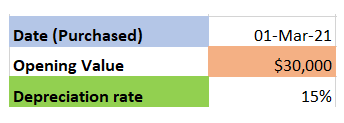
    Suppose given below are the details regarding the tools and equipment:

    And, we’re required to calculate the value of the tools and equipment as on 1-Mar-22

    In this, as we can see the business’ accounting period starts in March and ends in April. Therefore, we can easily deduct the depreciation amount and get the desired result.

    Solution: Opening Value = $30,000

    Depreciation = 15% of $30,000 = $4,500

    Value of tools and equipment as on 1-Mar-22 = $30,000 – $4500 = $25,500


    See less
    • 0
    • Share
      Share
      • Share on Facebook
      • Share on Twitter
      • Share on LinkedIn
      • Share on WhatsApp
Radha
Radha
In: 1. Financial Accounting > Financial Statements

Internal analysis of financial statements is done by?

(a) Potential investors (b) The owners or managers of the concern (c) Creditors and Lenders (d) Government​

  • 1 Answer
  • 0 Followers
Answer
  1. Simerpreet Helpful CMA Inter qualified
    Added an answer on July 27, 2021 at 4:12 pm

    The correct option is (b) and (d) As the internal analysis is done for the internal assessment of the firm, only those persons can carry out the assessment who has access to the internal accounting records of a business firm. As the owners or managers are the members of the top-level management execRead more

    The correct option is (b) and (d)

    As the internal analysis is done for the internal assessment of the firm, only those persons can carry out the assessment who has access to the internal accounting records of a business firm. As the owners or managers are the members of the top-level management executives they can carry out the work of internal analysis. Also, the government agencies can carry out internal analysis as they have been given the statutory powers of doing such works.

    To make it clear, let me explain a little about internal analysis-

    To determine the profitability of various activities and operations or to know the performance of the business concern, the top-level executives along with the management accountant carry out an internal assessment of the financial statements within the concern, this process is known as internal analysis.


    See less
    • 0
    • Share
      Share
      • Share on Facebook
      • Share on Twitter
      • Share on LinkedIn
      • Share on WhatsApp
Aadil
AadilCurious
In: 1. Financial Accounting > Departments & Branches

In branch accounting depreciation on branch fixed assets is?

Credited to Debtors Account Debited to Fixed Asset Account Shown in Branch Account Not shown in Branch Account

Branch AccountingDepreciationFixed Assets
  • 1 Answer
  • 0 Followers
Answer
  1. Manvi Pursuing ACCA
    Added an answer on July 20, 2021 at 1:02 pm
    This answer was edited.

    The correct answer is 4. Not shown in Branch Account. The value of depreciation of fixed assets will be not shown in the branch accounting because the opening value of the asset is recorded at the start of the period on the debit side and the closing value of the asset is shown on the credit side atRead more

    The correct answer is 4. Not shown in Branch Account.

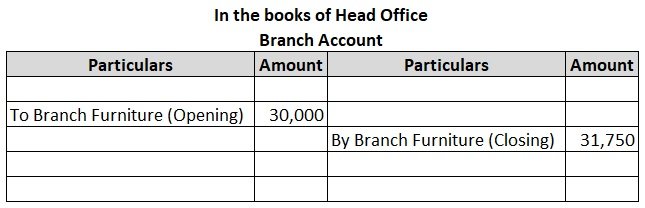
    The value of depreciation of fixed assets will be not shown in the branch accounting because the opening value of the asset is recorded at the start of the period on the debit side and the closing value of the asset is shown on the credit side at the end of the period.

    The difference between the opening and closing values of the asset is the value of depreciation which is automatically charged. In this case, if depreciation is also shown it will be counted twice.

    Example:

    XYZ Ltd purchased furniture for one of its branches on 1st January. Following are the details of the purchase:

    Furniture as on 1st January $30,000
    Furniture purchased on 1st June $5,000

    Depreciation is provided on furniture at @10% per annum on the straight-line method.

    Woking Notes: Amt 
    i. Depreciation on furniture:
    On $30,000 @10% p.a for full year 3,000
    On $5,000 @10% p.a for 6 months 250
    3,250
    ii. Branch Furniture as of 31 Dec:
    Furniture as of 1 January 30,000
    Add: Addition made during the year 5,000
    35,000
    Less: Depreciation (3,250)
    31,750

    As additional furniture was purchased after 6 months, depreciation will be charged on that and the total depreciation of 3,250 will be charged on the furniture of $35,000 ($30,000+$5,000) and the difference will be the closing balance which will be shown in the branch account on the credit side.

    The depreciation amount will not be shown in the Branch Account as the difference between the opening and closing values of the furniture reflects the value of depreciation. If depreciation is shown in the account it will be counted twice.

    See less
    • 0
    • Share
      Share
      • Share on Facebook
      • Share on Twitter
      • Share on LinkedIn
      • Share on WhatsApp
Load More Questions

Sidebar

Question Categories

  • 1. Financial Accounting

      • Accounting Terms & Basics
      • Bank Reconciliation Statement
      • Banks & NBFCs
      • Bills of Exchange
      • Capital & Revenue Expenses
      • Consignment & Hire Purchase
      • Consolidation
      • Contingent Liabilities & Assets
      • Departments & Branches
      • Depreciation & Amortization
      • Financial Statements
      • Goodwill
      • Insurance Accounting
      • Inventory or Stock
      • Investment Accounting
      • Journal Entries
      • Ledger & Trial Balance
      • Liquidation & Amalgamation
      • Miscellaneous
      • Not for Profit Organizations
      • Partnerships
      • Ratios
      • Shares & Debentures
      • Source Documents & Vouchers
      • Subsidiary Books
  • 2. Accounting Standards

      • AS
      • IFRS
      • IndAS
  • 3. Cost & Mgmt Accounting
  • 4. Taxes & Duties

      • GST
      • Income Tax
  • 5. Audit

      • Bank Audit
      • Internal Audit
      • Miscellaneous - Audit
      • Statutory Audit
  • 6. Software & ERPs

      • Tally
  • 7. MS-Excel
  • 8. Interview & Career
  • Top Questions
  • I need 20 journal entries with ledger and trial balance?

  • Can you show 15 transactions with their journal entries, ledger, ...

  • What is furniture purchased for office use journal entry?

  • What is loose tools account and treatment in final accounts?

  • What is the Journal Entry for Closing Stock?

  • What is the journal entry for goods purchased by cheque?

  • What is commission earned but not received journal entry?

  • How to show adjustment of loose tools revalued in final ...

  • What is the journal entry for interest received from bank?

  • Following is the Receipts and Payments Account of Bharti Club ...

Hot Topics

Accounting Policies Accounting Principles Balance Sheet Bank Reconciliation Statement Bill of Exchange Branch Accounting Calls in Advance Capital Capital Expenditure Companies Act Compound Entry Consignment Creditors Current Assets Debit Balance Debtors Depreciation Difference Between Dissolution of Firm Dissolution of Partnership Drawings External Users Fictitious Assets Final Accounts Financial Statements Fixed Assets Fixed Capital Fluctuating Capital Gain Impairment Installation Interest Received in Advance Internal Users Journal Entry Ledger Loose Tools Miscellaneous Expenditure Profit Rent Rent Received in Advance Reserves Revaluation Revenue Expenditure Revenue Reserve Sacrificing Ratio Subscription Subscription Received in Advance Trial Balance Type of Account Uncalled Capital
  • Home
  • Questions
    • Most Visited
    • Most Active
    • Trending
    • Recent
  • Follow
    • Categories
    • Users
    • Tags
  • Write an Answer
  • Badges & Points
  • Request New Category
  • Send a Suggestion

Most Helping Users

Astha

Astha

  • 50,291 Points
Leader
Simerpreet

Simerpreet

  • 72 Points
Helpful
AbhishekBatabyal

AbhishekBatabyal

  • 65 Points
Helpful

Footer

  • About Us
  • Contact Us
  • Pricing
  • Refund
  • Forum Rules & FAQs
  • Terms and Conditions
  • Privacy Policy
  • Career

© 2021 All Rights Reserved
Accounting Capital.