Please briefly explain why you feel this question should be reported.

Please briefly explain why you feel this answer should be reported.

Please briefly explain why you feel this user should be reported.

Sign InSign Up

AccountingQA

AccountingQA Logo AccountingQA Logo

AccountingQA Navigation

  • Home
  • Ask Questions
  • Write Answers
  • Explore
  • FAQs
Search
Ask A Question

Mobile menu

Close
Ask a Question
  • Home
  • Questions
    • Most Visited
    • Most Active
    • Trending
    • Recent
  • Follow
    • Categories
    • Users
    • Tags
  • Write an Answer
  • Badges & Points
  • Request New Category
  • Send a Suggestion
  • Search Your Accounting Question..

AccountingQA Latest Questions

Karan
Karan
In: 1. Financial Accounting > Subsidiary Books

What is a petty cash book?

  • 1 Answer
  • 0 Followers
Answer
  1. Ayushi Curious Pursuing CA
    Added an answer on October 31, 2021 at 9:43 am
    This answer was edited.

    Let’s understand what a cashbook is: A petty cash book is a cash book maintained to record petty expenses. By petty expenses, we mean small or minute expenses for which the payment is made in coins or a few notes like tea or coffee expense, bus or taxi fare, stationery expense etc. Such expenses areRead more

    Let’s understand what a cashbook is:

    • A petty cash book is a cash book maintained to record petty expenses.
    • By petty expenses, we mean small or minute expenses for which the payment is made in coins or a few notes like tea or coffee expense, bus or taxi fare, stationery expense etc.
    • Such expenses are numerous in a day for a business and to account for such small expenses along with major bank and cash transactions may create an extra hassle for the chief cashier of a business.
    • So, the cash is allocated for petty expenses and a petty cashier is appointed and the task of recording the petty expenses in the petty cashbook is delegated to him.

    The manner in which entries are made

    When cash is given to the petty cashier, entry is made on the debit side and in the petty cashbook and credit entry in the general cashbook.

    Entries for all the expenses are made on the credit side.

    Generally, the petty cashbook is prepared as per the Imprest system. As per the Imprest system, the petty expenses for a period (month or week) are estimated and a fixed amount is given to the petty cashier to spend for that period.

    At the end of the period, the petty cashier sends the details to the chief cashier and he is reimbursed the amount spent. In this way, the debit balance of the petty cashbook always remains the same.

    Format and items which appear in the petty cashbook

    The format of the petty cashbook depends upon the type of petty cash book is prepared and the items appearing in it are nothing but petty expenses. Let’s see an example:-

    A business incurred the following petty expenses for the month of April:-

    1. Stamp – Rs. 10
    2. Postage – Rs. 50
    3. Cartage- Rs. 100
    4. Telephone expense – Rs. 500
    5. Refreshments – Rs. 250

    Now we will prepare two types of cashbooks:

    • Ordinary Petty Cashbook:

    Here, the Petty cash book is of the same format as the general cash book.

    The cash allocated for petty expenses is recorded on the debit side of the petty cash book and on the credit side of the general cash book.

    • Analytical Petty Cashbook

    Here, there are separate amount columns for each type of expense. As the name suggests, this type of petty cashbook helps to analyse the petty cash spending on basis of the type of expense.

    See less
    • 0
    • Share
      Share
      • Share on Facebook
      • Share on Twitter
      • Share on LinkedIn
      • Share on WhatsApp
Manvi
Manvi
In: 1. Financial Accounting > Accounting Terms & Basics

Can you show 15 transactions with their journal entries, ledger, and trial balance?

  • 1 Answer
  • 0 Followers
Answer
  1. Ayushi Curious Pursuing CA
    Added an answer on October 29, 2021 at 3:30 am

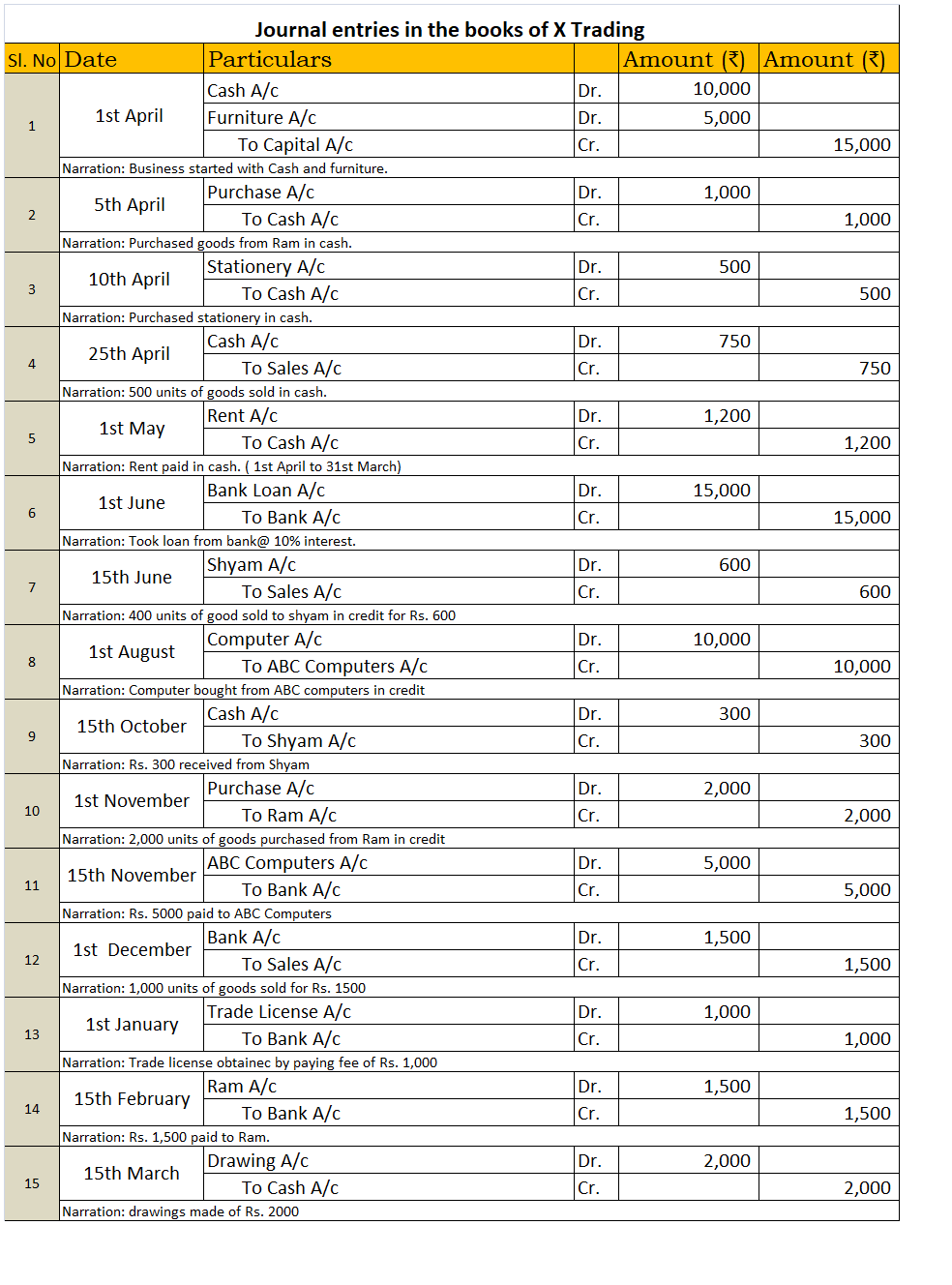
    Let the business in our example be X Trading. The 15 transactions are as follows: 1st April - X Trading started its business with Rs. 10,000 cash and furniture of Rs. 5,000. 5th April - Purchased 1,000 units of goods for Rs. 1,000 in cash from Ram. 10th April – Bought stationery for Rs. 100 in cash.Read more

    Let the business in our example be X Trading. The 15 transactions are as follows:

    1. 1st April – X Trading started its business with Rs. 10,000 cash and furniture of Rs. 5,000.
    2. 5th April – Purchased 1,000 units of goods for Rs. 1,000 in cash from Ram.
    3. 10th April – Bought stationery for Rs. 100 in cash.
    4. 25Th April – Sold 500 goods for Rs. 750 in cash.
    5. 1st May – Paid a rent of Rs. 1200 ( 1st April to 31st March)
    6. 1st June – Took a loan of Rs. 15,000 from the bank at interest@10%.
    7. 15Th June – Sold 400 goods for Rs. 600 to Shyam in credit.
    8. 1st August – Bought a computer for Rs. 10,000 in from ABC Computers in credit.
    9. 15th October – Received Rs. 300 from Shyam in cash.
    10. 1st November – Purchased 2,000 units of goods for 2,000 from Ram in credit.
    11. 15th November – Paid Rs. 5,000 to ABC Computers through cheque.
    12. 1st December – Sold 1,000 units of goods for Rs. 1,500. Received cheque as payment.
    13. 1st January – Obtained Trade license (valid for 5 years) by paying fees of Rs. 1000 through online bank transfer.
    14. 15Th February – Paid Rs. 1,500 to Ram. Through cheque.
    15. 15Th March – Drawings made of Rs. 2000 in cash.

    We will prepare the journal, ledgers and the trial balance from the above transactions.

    Journal

    Journal is known as the book of primary entry or book of original entry. It is because every transaction is recorded in form of journal entries in the journal. Every journal entry affects at least two accounts (dual effect). A transaction has to be a monetary transaction otherwise it cannot be recorded as a journal entry.

    The procedure of recording transactions as journal entries is simple if we follow the modern rules of accounting.

    So first we have to identify which and what type of account does a transaction affect. The types of accounts are:

    1. Asset – Debit in case of increase Credit in case of decrease.
    2. Liabilities – Debit in case of decrease Credit in case of increase.
    3. Capital – Debit in case of decrease Credit in case of increase.
    4. Expense – Debit in case of increase Credit in case of decrease.
    5. Income – Debit in case of decrease Credit in case of increase.

    Ledger

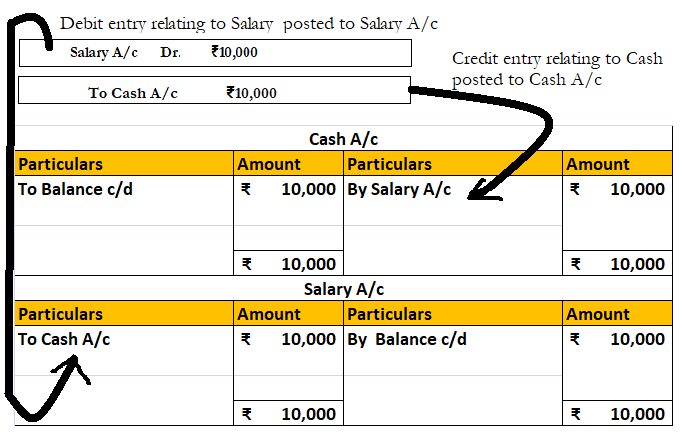
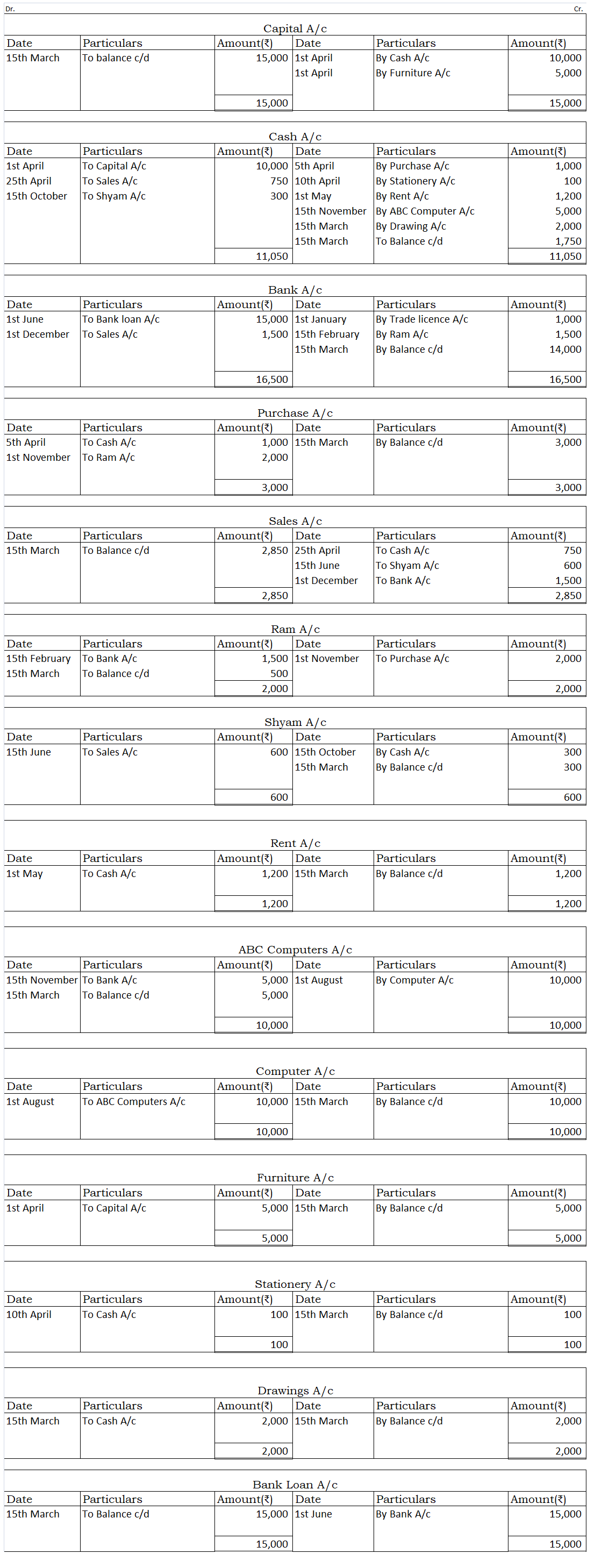
    Ledgers are known as the books of principal entry or book of final entry. All the journal entries recorded in the journal are posted to the ledgers. A Ledger is where the entries related to a particular account are recorded. For example, all the transactions related to salary will be recorded in the salary account ledger.

    It is very important to prepare the ledger to arrive at the balance of each account in the books of concern so that it can prepare its trial balance.

    The procedure of posting journal entries in the ledger account is done is as follows:
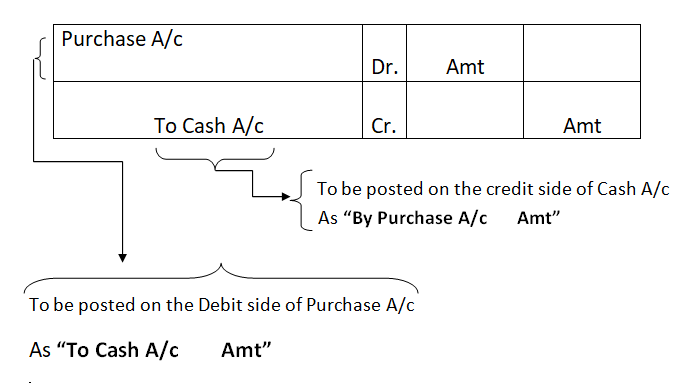
    The ledgers are as follows:


    Trial Balance

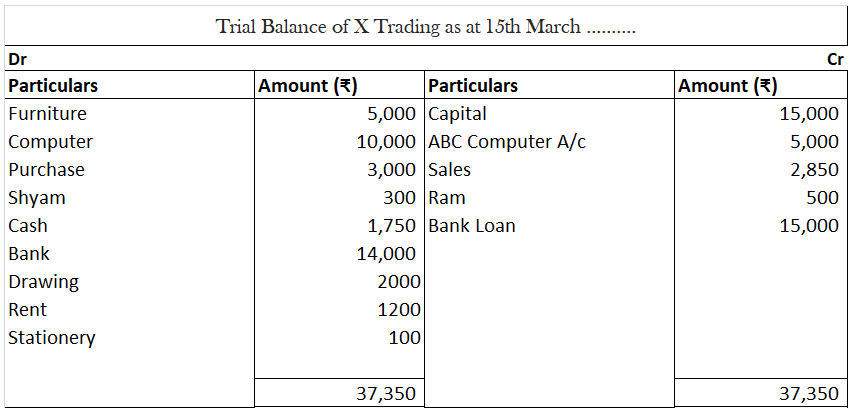
    The trial balance is not a part of the books of accounts. It is just a statement prepared to check the arithmetical accuracy of the books of the accounts. It also helps to know about the omission and posting mistakes. It is prepared after the ledger accounts have been drawn and their balances have been ascertained.

    The balance of all the ledger accounts is posted on either side of the trial balance. Debit balance of the account on the debit side and credit balance of the account on the credit side.

    Also, the closing stock from the financial statements of the previous year is posted on the debit side of the trial balance as opening stock to account for the stock with the business at the beginning of the financial year.

    Following is the trial balance of X trading:
    See less
    • 0
    • Share
      Share
      • Share on Facebook
      • Share on Twitter
      • Share on LinkedIn
      • Share on WhatsApp
AbhishekBatabyal
AbhishekBatabyalHelpful
In: 4. Taxes & Duties > Income Tax

What is advance tax?

  • 1 Answer
  • 0 Followers
Answer
  1. Ayushi Curious Pursuing CA
    Added an answer on October 27, 2021 at 4:56 am

    By the name, it can be easily deduced that Advance tax means the tax paid in advance. Advance tax is the tax paid by an assessee in the Previous Year itself based on his estimated income. We know that Income tax liability is known in the Assessment Year based on the income of the Previous Year. But,Read more

    By the name, it can be easily deduced that Advance tax means the tax paid in advance.

    Advance tax is the tax paid by an assessee in the Previous Year itself based on his estimated income.

    We know that Income tax liability is known in the Assessment Year based on the income of the Previous Year. But, the government encourages the taxpayers to pay the tax in the Previous Year itself based on the estimated income.

    As per section 208 of the Income Tax 1961, if the total income liability on the estimated income comes up more than Rs. 10,000, then advance tax has to be paid.

    The advance tax has to be paid according to the following schedule for the individual and corporate assessees [Other than the assessee who computing profits on a presumptive basis under section 44AD(1) and 44ADA(1)]:

    Due date of Instalment Amount Payable
    On or before 15th June No less than 15% advance tax liability.
    On or before 15th September No less than 45% of tax liability, as reduced by any amount if any paid in the earlier instalment.
    On or before 15th December No less than 75% of tax liability, as reduced by any amount or amounts if any paid in the earlier instalments.
    On or before 15th March No less than 100% of tax liability, as reduced by any amount or amounts if any paid in the earlier instalments.


    Any amount paid by the way of advance tax on or before 15th March shall be treated as advance tax paid during each financial year on or before 15th March.

    Also as per section 219, the tax credit is given for the advance tax paid in the regular assessment of income tax.

    In case of non-payment or short payment of the advance tax,  interest is payable as per section 234B. Interest is also attracted in case of delayed payment of advance tax as per section 234C.

    That’s all, I would conclude my answer hoping that it was helpful in making the concept of advance tax easy to grasp.

    See less
    • 0
    • Share
      Share
      • Share on Facebook
      • Share on Twitter
      • Share on LinkedIn
      • Share on WhatsApp
Ayushi
AyushiCurious
In: 4. Taxes & Duties > Income Tax

What is TDS?

  • 1 Answer
  • 0 Followers
Answer
  1. AbhishekBatabyal Helpful Pursuing CA, BCOM (HONS)
    Added an answer on October 24, 2021 at 8:00 pm
    This answer was edited.

    TDS stands for Tax Deducted at Source It is the tax deducted on certain incomes as specified under sections 192 to 194N of the Income Tax Act,1961 by the person who is responsible to pay such income. For example, an employer is liable to deduct the TDS on the salary paid to the employee subject to tRead more

    TDS stands for Tax Deducted at Source

    It is the tax deducted on certain incomes as specified under sections 192 to 194N of the Income Tax Act,1961 by the person who is responsible to pay such income.

    For example, an employer is liable to deduct the TDS on the salary paid to the employee subject to the provisions of the Income Tax Act, 1961.

    TDS is deducted either,

    • at the time of payment

    OR

    • At time of credit to the account of the payee or at the time of payment; whichever is earlier

    We know that Income tax liability is calculated after the income for a year is earned. In the next year, which is called the Assessment Year, income tax payable is calculated on the income earned in the Previous Year

    For example:

    Year 2021-2022 – This year (Previous Year) – Income is earned here.

    Year 2021-2022 – Next Year (Assessment Year) – Income tax is assessed here.

    But, the government collects the income tax from the income of the assessee in the Previous Year itself by the following ways:

    1. TDS – Tax Deducted at Source
    2. TCS – Tax Collected at Source
    3. Advance Tax

    Some of the most common sections are given below:

    1. Section 192 – Salary
    2. Section 194A – Interest other on securities deposits with the bank, post office etc) –  @10%
    3. Section 194B and 194BB – Winning from lotteries, crossword puzzle – @30%
    4. Section 194 – DA – Payment in respect of Life Insurance Policy – @5%.

    So, according to sections 192 to 194N, some amount of income tax is deducted from the income of the assessee in the Previous Year itself.

    In the Assessment Year, the assessee also gets a tax credit for the TDS i.e. the Income Tax liability gets reduced by the amount of Tax Deducted at Source in the Previous Year.

    See less
    • 0
    • Share
      Share
      • Share on Facebook
      • Share on Twitter
      • Share on LinkedIn
      • Share on WhatsApp
Manvi
Manvi
In: 1. Financial Accounting > Partnerships

Can someone show profit and loss appropriation account example?

  • 1 Answer
  • 0 Followers
Answer
  1. Ayushi Curious Pursuing CA
    Added an answer on October 21, 2021 at 7:37 pm
    This answer was edited.

    The profit and loss appropriation account is an account created in addition to the Trading & Profit and loss account in the case of partnership firms. It is a nominal account. The net profit or loss from the Profit and loss account is transferred to the Capital A/c when we do the accounting of sRead more

    The profit and loss appropriation account is an account created in addition to the Trading & Profit and loss account in the case of partnership firms. It is a nominal account.

    The net profit or loss from the Profit and loss account is transferred to the Capital A/c when we do the accounting of sole proprietors.

    But, while doing the accounting of partnership, there is a need to appropriate this profit or loss as there are two or more partners’ capital accounts. So, for this purpose, the Profit and loss appropriation account is created.

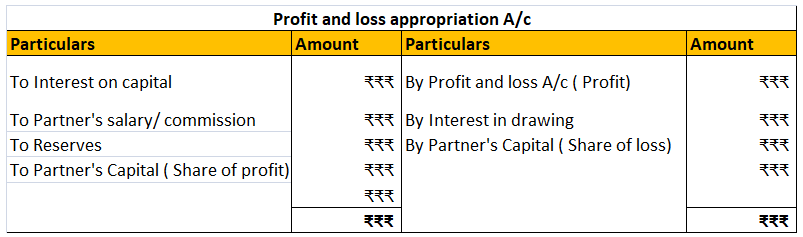
    The net profit or loss is appropriated among the partner’s capital after adjustment the items like partner’s salary, commission, interest on capital, interest on drawing etc. It consists of items related to the partner’s claim.

    The format of the profit and loss appropriation account is as below:

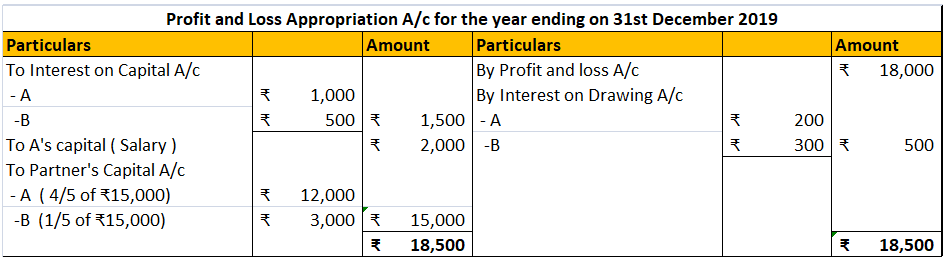
    Let solve a problem to sharpen our concept:

    A and B are partners in firm sharing profits and losses in the ratio of 4:1. On 1st January 2019, their capitals were ₹ 20,000 and ₹ 10,000 respectively. The partnership deed specifies the following:

    1. Interest on capital is to be allowed at 5% per annum.
    2. Interest on drawings charged to A and B are ₹ 200 and ₹ 300 respectively.
    3. The net profit of the firm before considering interest on capital and interest on drawings amounted to ₹ 18,000.
    4. A is to be paid an annual salary of ₹2000

    Prepare Profit and loss appropriation account for the year ending 31st December 2019.

    Solution:

    See less
    • 0
    • Share
      Share
      • Share on Facebook
      • Share on Twitter
      • Share on LinkedIn
      • Share on WhatsApp
Manvi
Manvi
In: 1. Financial Accounting > Journal Entries

What is the journal entry for commission received?

  • 1 Answer
  • 0 Followers
Answer
  1. Ayushi Curious Pursuing CA
    Added an answer on October 18, 2021 at 12:40 pm
    This answer was edited.

    The journal entry for commission received is as presented below: Cash A/c / Bank A/c  / A Personal A/c    Dr.    -   ₹                     To Commission received A/c          -        ₹         (Being ₹ commission received)   The commission received means an amount received by a person or entity forRead more

    The journal entry for commission received is as presented below:

    Cash A/c / Bank A/c  / A Personal A/c    Dr.    –   ₹

                        To Commission received A/c          –        ₹        

    (Being ₹ commission received)

      The commission received means an amount received by a person or entity for the provision of a service. For example, a firm sold goods worth ₹10,000 of a manufacturer and was paid an amount of ₹1000 in cash as commission. So, the entry in the books of accounts of the firm will be as follows:

    Cash A/c       Dr.       ₹1000

    To Commission received A/c    ₹1000

    Now, let’s understand the logic behind the journal entry through the modern rules of accounting.

    Cash account, bank account and personal account are asset accounts. Hence, they are debited when assets are increased.

    While the commission received account is an income account. Hence, when income increases, it is credited.

    As per the traditional rules i.e. the golden rules of accounting, these are the explanations:

    Commission can be received in cash or bank. Hence the Cash or Bank account is debited as they are real accounts.

    “Debit what comes in, credit what goes out”

    Also, when it is not received but accrued, then a personal account is debited (the person or entity who has received the service but has not paid for it yet).  The following rule applies to the personal account.

    “Debit the receiver, credit the giver”

     Commission received is an income, thus it is a nominal account. It will be credited because of the following rule of nominal accounts:-

    “Debit all expense and losses, credit all income and gains”

    See less
    • 0
    • Share
      Share
      • Share on Facebook
      • Share on Twitter
      • Share on LinkedIn
      • Share on WhatsApp
Manvi
Manvi
In: 1. Financial Accounting > Partnerships

What are unrecorded liabilities?

  • 1 Answer
  • 0 Followers
Answer
  1. AbhishekBatabyal Helpful Pursuing CA, BCOM (HONS)
    Added an answer on October 19, 2021 at 3:03 pm
    This answer was edited.

    As the name suggests, unrecorded liabilities means the liabilities that a firm fails to record in its book of accounts. Usually, a firm gets to know about its unrecorded liabilities when it is about to get dissolved. What happens is that upon hearing that a firm is going to dissolve in near future,Read more

    As the name suggests, unrecorded liabilities means the liabilities that a firm fails to record in its book of accounts.

    Usually, a firm gets to know about its unrecorded liabilities when it is about to get dissolved. What happens is that upon hearing that a firm is going to dissolve in near future, its creditors and lenders report to the firm about their dues.

    At that time, a firm may get to know that it had failed to record some liabilities in its books and it has settled them now.

    We know that when a partnership firm is dissolved, a realisation account is created to which all the assets and liabilities of the firm are transferred.  Entries are as given below:

    Realisation A/c     Dr.      ₹ Amt

    To Assets A/c                  ₹ Amt

    ( Asset transferred to realisation account)

    Liabilities A/c    Dr.        ₹ Amt

    To Realisation A/c       ₹ Amt

    (Liabilities transferred to realisation account)

    Hence, for transferring unrecorded liabilities, the procedure is the same for the recorded liabilities:

    Unrecorded Liabilities A/c        Dr.     ₹ Amt

    To Realisation A/c                               ₹ Amt

    ( Unrecorded liabilities transferred to realisation account)

    Then to pay off the unrecorded liability the entry is:

    Realisation A/c     Dr.    ₹ Amt

    To Cash / Bank A/c       ₹ Amt

    (Unrecorded liabilities paid off)

    That’s it, I hope I was able to make you understand.

    See less
    • 0
    • Share
      Share
      • Share on Facebook
      • Share on Twitter
      • Share on LinkedIn
      • Share on WhatsApp
Karan
Karan
In: 1. Financial Accounting > Subsidiary Books

What are secondary books of accounts?

  • 1 Answer
  • 0 Followers
Answer
  1. Ayushi Curious Pursuing CA
    Added an answer on October 19, 2021 at 7:56 am
    This answer was edited.

    Secondary books of accounts are most commonly known as subsidiary books of accounts or day books. They are prepared to record the same type of journals in an ordered manner in a special book. They are nothing, but special journals. Recording all the journals entries in a single journal and these posRead more

    Secondary books of accounts are most commonly known as subsidiary books of accounts or day books. They are prepared to record the same type of journals in an ordered manner in a special book. They are nothing, but special journals.

    Recording all the journals entries in a single journal and these posting them to different ledgers can be very difficult if the number of transactions is huge.

    So, recording the same type of transactions in a special journal proves to be useful in efficient book-keeping and also information retrieval.

    There are eight subsidiary books:

    1. Cashbook – It is three types. (a) Single column cash book – It records only cash receipts and cash payments. (b) Double column cash book – Apart from cash receipts and cash payments, it also records bank receipts and bank payments. (c) Triple column cash book – It additionally records the discount allowed and discount received.
    2. Purchase book – It records all the credit purchases except the purchase of assets.
    3. Sales book – It records all the credit sales except the sale of assets.
    4. Purchase return book – It records all the transactions related to the return of purchased goods.
    5. Sale return book – It records all the transactions related to the return of goods from customers.
    6. Bills receivable book – It records the particulars of all the bills drawn in favour of the business.
    7. Bills payable book – It records the particulars of all the bills drawn in the name of the business.
    8. Journal proper – It records those transactions which cannot be recorded in any of the above-mentioned books. For example, entry related to depreciation charged on assets.


    Also, there are a few more things to know:-

    1. Subsidiary books may look like ledger accounts but they are not ledgers. Ledgers are books of final entry and subsidiary books can be said to be the book of intermediate entry and are not but special journals.
    2. Once transactions are recorded in the subsidiary books, they are then posted to the ledgers.
    See less
    • 0
    • Share
      Share
      • Share on Facebook
      • Share on Twitter
      • Share on LinkedIn
      • Share on WhatsApp
Karan
Karan
In: 1. Financial Accounting > Partnerships

What balance does a partner’s current account has?

A. Debit balance B. Credit balance C. Either Debit or Credit D. None of these

  • 1 Answer
  • 0 Followers
Answer
  1. Ayushi Curious Pursuing CA
    Added an answer on October 16, 2021 at 12:11 pm
    This answer was edited.

    The correct option is C. Either Debit or Credit. Partner’s Current account is prepared when the capital account is of fixed nature. We know that partner’s capital account can be of fluctuating nature or fixed nature. In the case of fluctuating partner’s capital, all the transactions relating to theRead more

    The correct option is C. Either Debit or Credit.

    Partner’s Current account is prepared when the capital account is of fixed nature. We know that partner’s capital account can be of fluctuating nature or fixed nature.

    In the case of fluctuating partner’s capital, all the transactions relating to the appropriation of profit, salary, commission, drawings, the introduction of capital, interest on capital etc. are passed through the partner’s capital account.

    The balance of partner’s capital is generally credit but sometimes it may show debit balance indicating that the business owes to partner.

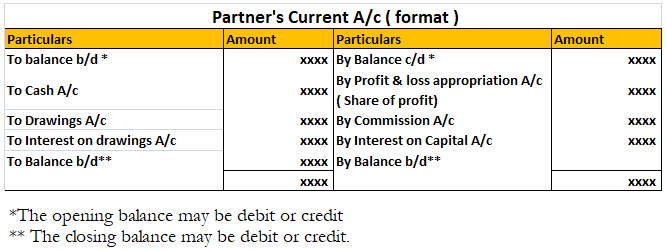
    But when the partner’s capital account is of fixed nature, then separate partner’ current accounts are prepared. Through this account, all the transactions of revenue nature are passed like appropriation of profits, salary or commission paid to a partner, interest on capital and drawings. The balance of this account may be debit or credit.

    The debit balance means the partner has withdrawn a lot of amount as drawings in anticipation of profits. The credit balance means the partner owes to the business.

    The partner’s capital shows a fixed amount as capital and its balance is affected only when additional capital is introduced or capital is withdrawn. The balance of this account is always credit.

    The partner current account is prepared when the firm wants to show the revenue transactions and capital transactions related to the partner ‘capital separately.

    See less
    • 0
    • Share
      Share
      • Share on Facebook
      • Share on Twitter
      • Share on LinkedIn
      • Share on WhatsApp
Karan
Karan
In: 1. Financial Accounting > Accounting Terms & Basics

What is the principal book of accounts?

  • 1 Answer
  • 0 Followers
Answer
  1. AbhishekBatabyal Helpful Pursuing CA, BCOM (HONS)
    Added an answer on October 16, 2021 at 11:06 am
    This answer was edited.

    The term "principal book of accounts'' refers to the set of ledgers that an entity prepares to group the similar transactions recorded as journal entries under an account. So to put it simply, the principal book of accounts mean ledgers. Ledgers are prepared by posting the debits and credits of a joRead more

    The term “principal book of accounts” refers to the set of ledgers that an entity prepares to group the similar transactions recorded as journal entries under an account.

    So to put it simply, the principal book of accounts mean ledgers.

    Ledgers are prepared by posting the debits and credits of a journal entry to the respective accounts.

    A ledger groups the transactions concerning the same account. For example, Mr B is a debtor of X Ltd. Hence all the transactions entered into with Mr. will be grouped into the ledger Mr B A/c in the books of X Ltd.

    Ledgers are of utmost importance because all the information to any account can be known by its ledger.

    Preparation of ledger is very important because all the information to any account can be known by its ledger. Ledgers also display the balance of each and every account which may be debit or credit. This helps in the preparation of the trial balance and subsequently the financial statements of an entity.

    Hence, it is the most important book of accounts and calling it the ‘books of final entry’ is also justified.

    See less
    • 0
    • Share
      Share
      • Share on Facebook
      • Share on Twitter
      • Share on LinkedIn
      • Share on WhatsApp

Sidebar

Question Categories

  • 1. Financial Accounting

      • Accounting Terms & Basics
      • Bank Reconciliation Statement
      • Banks & NBFCs
      • Bills of Exchange
      • Capital & Revenue Expenses
      • Consignment & Hire Purchase
      • Consolidation
      • Contingent Liabilities & Assets
      • Departments & Branches
      • Depreciation & Amortization
      • Financial Statements
      • Goodwill
      • Insurance Accounting
      • Inventory or Stock
      • Investment Accounting
      • Journal Entries
      • Ledger & Trial Balance
      • Liquidation & Amalgamation
      • Miscellaneous
      • Not for Profit Organizations
      • Partnerships
      • Ratios
      • Shares & Debentures
      • Source Documents & Vouchers
      • Subsidiary Books
  • 2. Accounting Standards

      • AS
      • IFRS
      • IndAS
  • 3. Cost & Mgmt Accounting
  • 4. Taxes & Duties

      • GST
      • Income Tax
  • 5. Audit

      • Bank Audit
      • Internal Audit
      • Miscellaneous - Audit
      • Statutory Audit
  • 6. Software & ERPs

      • Tally
  • 7. MS-Excel
  • 8. Interview & Career
  • Top Questions
  • I need 20 journal entries with ledger and trial balance?

  • Can you show 15 transactions with their journal entries, ledger, ...

  • What is furniture purchased for office use journal entry?

  • What is loose tools account and treatment in final accounts?

  • What is the Journal Entry for Closing Stock?

  • What is the journal entry for goods purchased by cheque?

  • What is commission earned but not received journal entry?

  • How to show adjustment of loose tools revalued in final ...

  • What is the journal entry for interest received from bank?

  • Following is the Receipts and Payments Account of Bharti Club ...

Hot Topics

Accounting Policies Accounting Principles Balance Sheet Bank Reconciliation Statement Bill of Exchange Branch Accounting Calls in Advance Capital Capital Expenditure Companies Act Compound Entry Consignment Creditors Current Assets Debit Balance Debtors Depreciation Difference Between Dissolution of Firm Dissolution of Partnership Drawings External Users Fictitious Assets Final Accounts Financial Statements Fixed Assets Fixed Capital Fluctuating Capital Gain Impairment Installation Interest Received in Advance Internal Users Journal Entry Ledger Loose Tools Miscellaneous Expenditure Profit Rent Rent Received in Advance Reserves Revaluation Revenue Expenditure Revenue Reserve Sacrificing Ratio Subscription Subscription Received in Advance Trial Balance Type of Account Uncalled Capital
  • Home
  • Questions
    • Most Visited
    • Most Active
    • Trending
    • Recent
  • Follow
    • Categories
    • Users
    • Tags
  • Write an Answer
  • Badges & Points
  • Request New Category
  • Send a Suggestion

Most Helping Users

Astha

Astha

  • 50,291 Points
Leader
Simerpreet

Simerpreet

  • 72 Points
Helpful
AbhishekBatabyal

AbhishekBatabyal

  • 65 Points
Helpful

Footer

  • About Us
  • Contact Us
  • Pricing
  • Refund
  • Forum Rules & FAQs
  • Terms and Conditions
  • Privacy Policy
  • Career

© 2021 All Rights Reserved
Accounting Capital.