Please briefly explain why you feel this question should be reported.

Please briefly explain why you feel this answer should be reported.

Please briefly explain why you feel this user should be reported.

Sign InSign Up

AccountingQA

AccountingQA Logo AccountingQA Logo

AccountingQA Navigation

  • Home
  • Ask Questions
  • Write Answers
  • Explore
  • FAQs
Search
Ask A Question

Mobile menu

Close
Ask a Question
  • Home
  • Questions
    • Most Visited
    • Most Active
    • Trending
    • Recent
  • Follow
    • Categories
    • Users
    • Tags
  • Write an Answer
  • Badges & Points
  • Request New Category
  • Send a Suggestion
  • Search Your Accounting Question..

  • Recent Questions
  • Most Answered
  • Answers
  • Most Visited
  • Most Voted
  • No Answers

AccountingQA Latest Questions

Aadil
AadilCurious
In: 1. Financial Accounting > Miscellaneous

What is an example of general reserve?

  • 1 Answer
  • 0 Followers
Answer
  1. Astha Leader Pursuing CA, BCom (Hons.)
    Added an answer on March 25, 2022 at 5:41 pm
    This answer was edited.

    General reserve is the part of profits or money kept aside to meet future uncertainties and obligations of the entity.  General reserve is created out of revenue profits for unspecified purposes and therefore is also a part of free reserves. General reserve forms a part of the Profit & Loss ApprRead more

    General reserve is the part of profits or money kept aside to meet future uncertainties and obligations of the entity.  General reserve is created out of revenue profits for unspecified purposes and therefore is also a part of free reserves.

    General reserve forms a part of the Profit & Loss Appropriation account and is created to strengthen the financial position of the entity and serves as a sources of internal financing. It is upon the discretion of the management as to how much of a reserve is to be created. No reserve is created when the entity incurs losses.

    General reserve is shown in the Reserves & Surplus head on the liability side of the balance sheet of the entity and carries a credit balance.

    Suppose, an entity, ABC Ltd engaged in the business of electronics earns a profit of 85000 in the current financial year and has an existing general reserve amounting to 100000. The management decides to keep aside 20% of its profits as general reserve.

    Then the amount to be transferred to general reserve will be = 85000*20% = 17000.

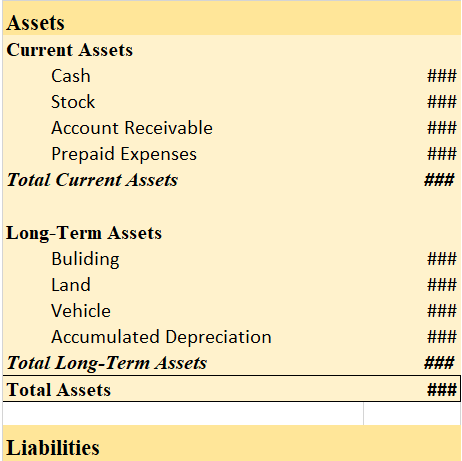
    In the financial statements it will be shown as follows-

    Now, in the next financial year, the entity incurs losses amounting to 45000. In this case, no amount shall be transferred to the general reserve of the entity and will be shown in the financial statement as follows-

    The creation of general reserve can sometimes be deceiving since it does not show the clear picture of the entity and absorbs losses incurred.

    See less
    • 0
    • Share
      Share
      • Share on Facebook
      • Share on Twitter
      • Share on LinkedIn
      • Share on WhatsApp
Jayesh Gupta
Jayesh GuptaCurious
In: 1. Financial Accounting > Ledger & Trial Balance

Which errors are revealed by trial balance?

  • 1 Answer
  • 0 Followers
Answer
  1. GautamSaxena Curious .
    Added an answer on July 18, 2022 at 8:24 pm
    This answer was edited.

    Errors revealed by Trial Balance Trial balance, as we know, is a statement prepared after the ledger, followed by a journal. It has a list of all the general ledger accounts contained in the ledger of a business. Each nominal ledger account either holds a debit balance or credit. It is primarily useRead more

    Errors revealed by Trial Balance

    Trial balance, as we know, is a statement prepared after the ledger, followed by a journal. It has a list of all the general ledger accounts contained in the ledger of a business. Each nominal ledger account either holds a debit balance or credit.

    It is primarily used to identify the balance of debits and credits entries from the transactions recorded in the general ledger in a certain accounting period. The debit and credit sides total are equal in a trial balance.

    Classification of errors in the trial balance

    • Errors of Commission: Errors arising due to wrong posting of a journal entry, a ledger account, wrong totaling of a subsidiary book, or even wrong recording of accounts. Therefore, resulting in trial balance error. E.g business receives an amount on goods sold on credit but it is instead posted to additional capital a/c.
    • Errors of Omission: This occurs when some transactions are fully or partially omitted from books of accounts. A complete omission is a case when the transaction is completely omitted but a partial omission is seen when the transaction is entered in the journal but not posted to the ledger. E.g a cheque worth $4,100 was received from ABC Ltd. but completely omitted. Then the rectification entry shall be passed later on.
    • Compensating Errors: It occurs when the errors are equal in amount and opposite to each other so and so that they cancel each other which further creates no difference in the Trial Balance. E.g Harry’s account is debited to $300 wrongly instead of $400. On the other hand, Liam’s account is credited by $700 instead of $800.
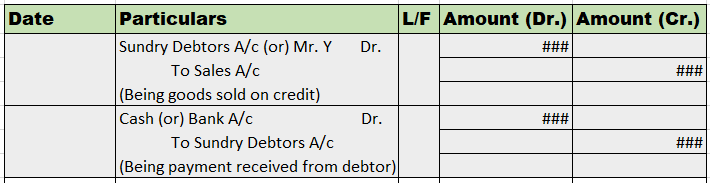
    • Errors of Principles: These are the errors occurring when the entries that are posted are incorrect, violating the accounting policy. E.g when receiving money from debtor then debiting debtor and crediting the amount of money received.

    Some of the common errors

    Some more (commonly seen) errors while preparation of the trial balance:

    Errors of Commission

    1. Addition or totaling mistakes in the trial balance, debit, and credit side.
    2. Wrong totaling of subsidiary books.
    3. Error in the sum total of subsidiary book.
    4. Posting in the wrong account.
    5. Recording a transaction incorrectly in a journal.
    6. Balance wrote on the wrong side of the trial balance.
    7. Error in posting a journal to a ledger.
    8. Posting on the wrong side of the account.

    Errors of Omission

    1. Goods purchased and returned to the supplier may be entered in the purchase returns book but not posted in the debit of the supplier account.
    2. Cash paid to creditors was completely omitted from the recording.

    Compensating Errors

    • Wrong posting of the same amount in another account, which may not be affecting the equalizing of trial balance.

    Errors of Principles

    1. Posting twice to a ledger account.
    2. Balance c/d or balance b/d is written on the wrong side of the ledger account.
    3. Reversal of a journal entry by mistake like, crediting cash and debiting debtor’s a/c.


    See less
    • 0
    • Share
      Share
      • Share on Facebook
      • Share on Twitter
      • Share on LinkedIn
      • Share on WhatsApp
Bonnie
BonnieCurious
In: 6. Software & ERPs > Tally

How to make credit note in tally prime?

  • 1 Answer
  • 0 Followers
Answer
  1. AbhishekBatabyal Helpful Pursuing CA, BCOM (HONS)
    Added an answer on August 22, 2022 at 8:17 pm

    Credit Note A credit note is a document which generally evidences a sales return. It is created by the seller and sent to the buyer acknowledging the receipt of goods returned by the buyer. On the basis of it, the seller promises to pay back the buyer for the goods returned to him or adjust the amouRead more

    Credit Note

    A credit note is a document which generally evidences a sales return. It is created by the seller and sent to the buyer acknowledging the receipt of goods returned by the buyer. On the basis of it, the seller promises to pay back the buyer for the goods returned to him or adjust the amount in future transactions.

    A credit note is also created when the buyer has sent excess money by mistake against the goods delivered to him.

    In Tally, a credit note is created using a credit note voucher. Now, a credit note can only be created only if a sales entry has been made.

    Hence first, we will be creating a sales entry and then the credit note.

     Creation of sales entry in sales voucher ( If not done before)

    The step to create a sale entry in Tally prime is as follows:

    Gateway of Tally –> Vouchers –> Press F8 to open sales voucher

    Enter the details of sales in the sales voucher like I have entered in my sale voucher and accept.

    Here, my debtor is Rama and I have sold 1000pcs of Linc pens@Rs. 10 to him

    Important things to consider:

    • If no ledger accounts, stock items and stock units are created in your company, you can easily create them while in the voucher creation menu itself. Just press Alt + C  in the field where you need to enter party name, stock item name or stock unit name and the respective creation menus will open.
    • After entering the item details, a new menu will open which will ask for which account to be credited for the sale entry. As we know, a sales account is credited, so you have select the sales account from the menu or simply create a Sales account if not created by pressing Alt + C. Below is that menu:

    #2 Creation of credit note

    If already in the voucher creation menu, just press Alt + F6 to open the credit note voucher.

    Enter the party name and a menu will open, asking for a tracking number.  No need to enter any details there.

    Next, another menu will open asking for party details. Select the name of the respective debtor.

    Next enter the details of stock items returned as I have done:

    I have made a credit note for 100pcs of Linc pens returned by Rama.

    After entering all the details, press Enter and accept.

    You can verify the effect of this sales voucher by performing the following steps.

    Gateway of Tally –> Display more reports –> Account Books –> Ledger –>Select the debtor account from the list of ledgers.

    After opening the ledger, if you see that the debtor account is credited by an amount through a credit note voucher, then it can be said that you have performed the steps correctly.

    See less
    • 0
    • Share
      Share
      • Share on Facebook
      • Share on Twitter
      • Share on LinkedIn
      • Share on WhatsApp
A_Team
A_Team
In: 1. Financial Accounting > Financial Statements

Which type of account is trading account?

  • 1 Answer
  • 0 Followers
Answer
  1. Bonnie Curious MBA (Finance)
    Added an answer on December 13, 2022 at 8:33 am
    This answer was edited.

    As per the Golden Rules As per the golden rules of accounting, a trading account is a nominal account. To ensure that financial statements accurately reflect a business's financial position and performance, the golden rules of accounting guide the preparation of financial statements. The point to noRead more

    As per the Golden Rules

    As per the golden rules of accounting, a trading account is a nominal account. To ensure that financial statements accurately reflect a business’s financial position and performance, the golden rules of accounting guide the preparation of financial statements.

    The point to note is that it is almost impossible to apply the rules of debit and credit with certain accounts such as Trading A/c, Profit & Loss A/c, etc.


    As per the Modern Rules

    The purpose of a trading account is to record transactions related to the purchase and sale of goods for a business. In other words, it serves as a recording and reporting mechanism for business income and expenses.

    An accounting period, like a month, quarter, or year, is the time when a trading account is prepared. It is used to calculate the business’s net profit or loss. Other financial statements, such as the balance sheet, are prepared using the information in a trading account.

    In summary, a trading account is a type of income statement account that is used to track and report on the income and expenses from a business’s buying and selling activities


    Rules of Debit and Credit

    There are three main types of accounts according to the legacy rules of debit and credit: personal accounts, real accounts, and nominal accounts. A personal account is one that is related to an individual or entity owing the business money (e.g. a customer), or owing the business money (e.g. a supplier).

    A real account is one that relates to assets such as cash, inventory, and property.

    Nominal accounts are accounts that relate to income and expenses, such as a “trading account”.

    To summarize, a trading account is a nominal account used to record and report the business’s income and expenses resulting from its buying and selling activities.

    See less
    • 0
    • Share
      Share
      • Share on Facebook
      • Share on Twitter
      • Share on LinkedIn
      • Share on WhatsApp
Simerpreet
SimerpreetHelpful
In: 1. Financial Accounting > Miscellaneous

Which of the following accounts have a debit balance?

A. Furniture B. Capital C. Sales D. Commission earned

  • 1 Answer
  • 5 Followers
Answer
  1. Ishika Pandey Curious ca aspirant
    Added an answer on February 14, 2023 at 2:55 am

    Definition Where the total of the debit side is more than the credit side therefore the difference is the debit balance and is placed credit side as “ by balance c/d “ A furniture account that is an asset has a debit balance. Debit balance may arise due to timing differences in which case income wilRead more

    Definition

    Where the total of the debit side is more than the credit side therefore the difference is the debit balance and is placed credit side as “ by balance c/d “

    A furniture account that is an asset has a debit balance.

    Debit balance may arise due to timing differences in which case income will be accrued at the year’s end to offset the debit.

    The amount is shown in the record of a company s finances, by which its total debits are greater than its total credits.

    The account which has debit balances are as follows:

    • Assets accounts

    Land, furniture, building machinery, etc

    • Expenses accounts

    Salary, rent, insurance, etc

    • Losses

    Bad debts, loss by fire, etc

    • Drawings

    Personal drawings of cash or assets

    • Cash and bank balances

    Balances of these accounts

    The account has credit balances as follows:

    • Liabilities accounts

    Creditors, bills payable, etc

    • Income accounts

    Salary received, interest received, etc

    • Profits

    Dividends, interest, etc

    • Capital

    Partners Capital


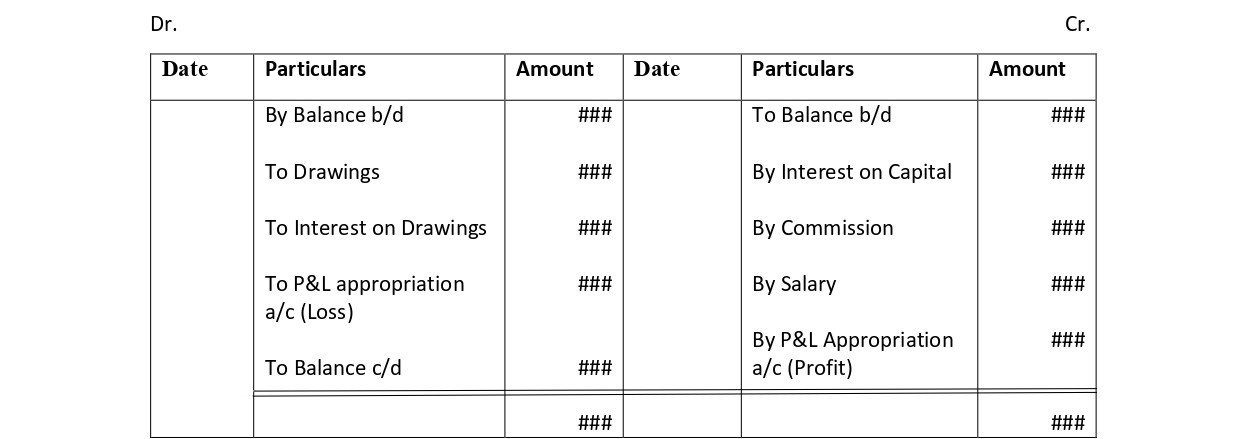
    Here are some examples showing the debit balances and credit balances of the accounts :

    See less
    • 5
    • Share
      Share
      • Share on Facebook
      • Share on Twitter
      • Share on LinkedIn
      • Share on WhatsApp
Aditi
Aditi
In: 1. Financial Accounting > Miscellaneous

How are Research & Development costs treated in financial statements?

  • 1 Answer
  • 0 Followers
Answer
  1. Mehak
    Added an answer on January 14, 2025 at 4:30 am
    This answer was edited.

    Every business requires research and development to create innovative products for consumers. More innovative and creative products and services are more popular among customers, leading to increased revenue and profits for the business. Creating new products or designing changes and testing existinRead more

    Every business requires research and development to create innovative products for consumers. More innovative and creative products and services are more popular among customers, leading to increased revenue and profits for the business.

    Creating new products or designing changes and testing existing products also forms a part of research and development.

    Examples of Research and Development costs are –

    1. Salaries of employees
    2. Cost of making prototypes
    3. Cost of raw material
    4. Overhead expenses

    Let us now understand how research and development costs are treated in Financial Statements.

    Research and Development Costs are generally shown as an expense in the Income Statement.

    IAS-38

    IAS-38 majorly governs the accounting of research and development costs. There are two phases in R&D:

    • Research: During this phase, costs are incurred for understanding or designing the product. These costs are expensed as incurred costs as there is an uncertainty of a future benefit.
    •  Development: Economic value can be ascertained during this phase and hence, the costs incurred can be capitalized as Intangible assets. To be recognised as intangible assets, the following conditions shall be satisfied:

    1. it is developed with the intention of putting it to use in the future

    2.  the asset shall hold an economic value

    3. the costs can be measured reliably

    Treatment of R&D costs in the Financial statements:

      1. Income statement: Research costs are shown as expenses in the income statement. However, development costs if capitalized as intangible assets can be amortised over time.
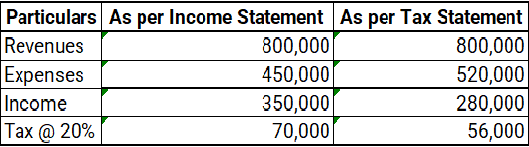
      2. Balance Sheet: Capitalised development costs are shown as intangible assets under the Assets head of the Balance Sheet.

    Conclusion

    The above discussion can be summarised as follows:

    1. Research and development is essential for creating innovative and creative products and services.
    2. Accounting standard IAS-38 governs the accounting for Research and Development.
    3. Research costs are usually shown as an expense in the Income statement of the business.
    4.  Development costs when capitalised can be shown as Intangible assets in the Balance Sheet.
    See less
    • 0
    • Share
      Share
      • Share on Facebook
      • Share on Twitter
      • Share on LinkedIn
      • Share on WhatsApp

Sidebar

Question Categories

  • 1. Financial Accounting

      • Accounting Terms & Basics
      • Bank Reconciliation Statement
      • Banks & NBFCs
      • Bills of Exchange
      • Capital & Revenue Expenses
      • Consignment & Hire Purchase
      • Consolidation
      • Contingent Liabilities & Assets
      • Departments & Branches
      • Depreciation & Amortization
      • Financial Statements
      • Goodwill
      • Insurance Accounting
      • Inventory or Stock
      • Investment Accounting
      • Journal Entries
      • Ledger & Trial Balance
      • Liquidation & Amalgamation
      • Miscellaneous
      • Not for Profit Organizations
      • Partnerships
      • Ratios
      • Shares & Debentures
      • Source Documents & Vouchers
      • Subsidiary Books
  • 2. Accounting Standards

      • AS
      • IFRS
      • IndAS
  • 3. Cost & Mgmt Accounting
  • 4. Taxes & Duties

      • GST
      • Income Tax
  • 5. Audit

      • Bank Audit
      • Internal Audit
      • Miscellaneous - Audit
      • Statutory Audit
  • 6. Software & ERPs

      • Tally
  • 7. MS-Excel
  • 8. Interview & Career
  • Top Questions
  • I need 20 journal entries with ledger and trial balance?

  • Can you show 15 transactions with their journal entries, ledger, ...

  • What is furniture purchased for office use journal entry?

  • What is loose tools account and treatment in final accounts?

  • What is the Journal Entry for Closing Stock?

  • What is the journal entry for goods purchased by cheque?

  • What is commission earned but not received journal entry?

  • How to show adjustment of loose tools revalued in final ...

  • What is the journal entry for interest received from bank?

  • Following is the Receipts and Payments Account of Bharti Club ...

Hot Topics

Accounting Policies Accounting Principles Balance Sheet Bank Reconciliation Statement Bill of Exchange Branch Accounting Calls in Advance Capital Capital Expenditure Companies Act Compound Entry Consignment Creditors Current Assets Debit Balance Debtors Depreciation Difference Between Dissolution of Firm Dissolution of Partnership Drawings External Users Fictitious Assets Final Accounts Financial Statements Fixed Assets Fixed Capital Fluctuating Capital Gain Impairment Installation Interest Received in Advance Internal Users Journal Entry Ledger Loose Tools Miscellaneous Expenditure Profit Rent Rent Received in Advance Reserves Revaluation Revenue Expenditure Revenue Reserve Sacrificing Ratio Subscription Subscription Received in Advance Trial Balance Type of Account Uncalled Capital
  • Home
  • Questions
    • Most Visited
    • Most Active
    • Trending
    • Recent
  • Follow
    • Categories
    • Users
    • Tags
  • Write an Answer
  • Badges & Points
  • Request New Category
  • Send a Suggestion

Most Helping Users

Astha

Astha

  • 50,291 Points
Leader
Simerpreet

Simerpreet

  • 72 Points
Helpful
AbhishekBatabyal

AbhishekBatabyal

  • 65 Points
Helpful

Footer

  • About Us
  • Contact Us
  • Pricing
  • Refund
  • Forum Rules & FAQs
  • Terms and Conditions
  • Privacy Policy
  • Career

© 2021 All Rights Reserved
Accounting Capital.