

Let us first understand what working capital is. Working capital means the funds available for the day-to-day operations of an enterprise. It is a measure of a company’s liquidity and short term financial health. They are cash or mere cash resources of a business concern. It also represents the exceRead more
Let us first understand what working capital is.
Working capital means the funds available for the day-to-day operations of an enterprise. It is a measure of a company’s liquidity and short term financial health. They are cash or mere cash resources of a business concern.
It also represents the excess of current assets, such as cash, accounts receivable and inventories, over current liabilities, such as accounts payable and bank overdraft.

Sources of Working Capital
Any transaction that increases the amount of working capital for a company is a source of working capital.
Suppose, Amazon sells its goods for $1,000 when the cost is only $700. Then, the difference of $300 is the source of working capital as the increase in cash is greater than the decrease in inventory.
Sources of working capital can be classified as follows:
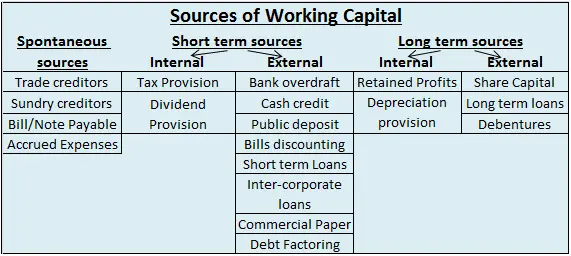
Short Term Sources
- Trade credit: Credit given by one business firm to the other arising from credit sales. It is a spontaneous source of finance representing credit extended by the supplier of goods and services.
- Bills/Note payable: The purchaser gives a written promise to pay the amount of bill or invoice either on-demand or at a fixed future date to the seller or the bearer of the note.
- Accrued expenses: It refers to the services availed by the firm, but the payment for which is yet to be done. It represents an interest-free source of finance.
- Tax/Dividend provisions: It is a provision made out of current profits to meet the tax/dividend obligation. The time gap between provision made and payment of actual payment serves as a source of short-term finance during the intermediate period.
- Cash Credit/Overdraft: Under this arrangement, the bank specifies a pre-determined limit for borrowings. The borrower can withdraw as required up to the specified limits.
- Public deposit: These are unsecured deposits invited by the company from the public for a period of six months to 3 years.
- Bills discounting: It refers to an activity wherein a discounted amount is released by the bank to the seller on purchase of the bill drawn by the borrower on their customers.
- Short term loans: These loans are granted for a period of less than a year to fulfil a short term liquidity crunch.
- Inter-corporate loans/deposits: Organizations having surplus funds invest with other organizations for up to six months at rates higher than that of banks.
- Commercial paper: These are short term unsecured promissory notes sold at discount and redeemed at face value. These are issued for periods ranging from 7 to 360 days.
- Debt factoring: It is an arrangement between the firm (the client) and a financial institution (the factor) whereby the factor collects dues of his client for a certain fee. In other words, the factor purchases its client’s trade debts at a discount.
Long Term Sources
- Retained profits: These are profits earned by a business in a financial year and set aside for further usage and investments.
- Share Capital: It is the money invested by the shareholders in the company via purchase of shares floated by the company in the market.
- Long term loans: These loans are disbursed for a period greater than 1 year to the borrower in his account in cash. Interest is charged on the full amount irrespective of the amount in use. These shareholders receive annual dividends against the money invested.
- Debentures: These are issued by companies to obtain funds from the public in form of debt. They are not backed by any collateral but carry a fixed rate of interest to be paid by the company to the debenture holders.
Another point I would like to add is that, although depreciation is recorded in expense and fixed assets accounts and does not affect working capital, it still needs to be accounted for when calculating working capital.
See less









Definition Goodwill is an intangible asset that places an enterprise in an advantageous position due to which the enterprise is able to earn higher profits without extra effort. For example, if the enterprise has rendered good services to its customers, it will be satisfied with the quality of its sRead more
Definition
Goodwill is an intangible asset that places an enterprise in an advantageous position due to which the enterprise is able to earn higher profits without extra effort.
For example, if the enterprise has rendered good services to its customers, it will be satisfied with the quality of its services, which will bring them back to the enterprise.
Features
The value of goodwill is a subjective assessment of the valuer.
• It helps in earning higher profits.
• It is an intangible asset.
• It is an attractive force that brings in customers to the business.
• It has realizable value when the business is sold out.
Need for goodwill valuation
The need for the valuation of goodwill arises in the following circumstances :
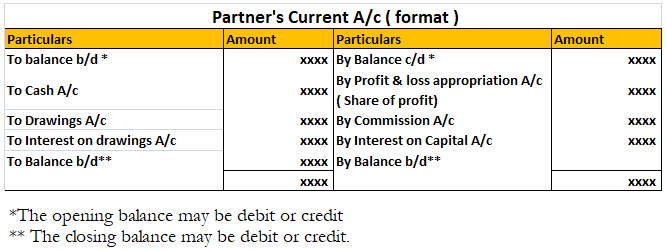
• When there is a change in profit sharing ratio.
• When a new partner is admitted.
• When partner retires or dies.
• When a partnership firm is sold as a going concern.
• When two or more firms amalgamate.
Classification of goodwill
Goodwill is classified into two categories:
• Purchased goodwill
• Self-generated goodwill
Purchased goodwill :
Is that goodwill acquired by the firm for consideration whether paid or kind?
For example: when a business is purchased and purchase consideration is more than the value of net assets the difference amount is the value of purchase goodwill.
Self-generated goodwill
It is that goodwill that is not purchased for consideration but is earned by the management’s efforts.
It is an internally generated goodwill that arises from a number of factors ( such as favorable location, efficient management, good quality of products, etc ) that a running business possesses due to which it is able to earn higher profits.
Methods of valuation
1. Average profit method
2. Super profit method
3. Capitalization method
Average profit method: goodwill under the average profit method can be calculated either by :
• Simple average profit method or
• Weighted average profit method
See less