Please briefly explain why you feel this question should be reported.

Please briefly explain why you feel this answer should be reported.

Please briefly explain why you feel this user should be reported.

Sign InSign Up

AccountingQA

AccountingQA Logo AccountingQA Logo

AccountingQA Navigation

  • Home
  • Ask Questions
  • Write Answers
  • Explore
  • FAQs
Search
Ask A Question

Mobile menu

Close
Ask a Question
  • Home
  • Questions
    • Most Visited
    • Most Active
    • Trending
    • Recent
  • Follow
    • Categories
    • Users
    • Tags
  • Write an Answer
  • Badges & Points
  • Request New Category
  • Send a Suggestion
  • Search Your Accounting Question..

  • Most Visited
  • Most Voted
  • Followed Questions
  • Most Answered
  • No Answers

AccountingQA Latest Questions

Simerpreet
SimerpreetHelpful
In: 1. Financial Accounting > Depreciation & Amortization

What is vehicle depreciation journal entry?

  • 1 Answer
  • 0 Followers
Answer
  1. Poorvi_*
    Added an answer on November 24, 2022 at 4:11 pm
    This answer was edited.

    When the Accumulated depreciation account is not maintained, the journal entry for vehicle depreciation shall be                              Particulars     Debit   Credit Depreciation a/c                                              Dr.      (xxx)      To Vehicle a/c      (xxx) (Being DepreciationRead more

    When the Accumulated depreciation account is not maintained, the journal entry for vehicle depreciation shall be

                                 Particulars     Debit   Credit
    Depreciation a/c                                              Dr.      (xxx)
         To Vehicle a/c      (xxx)
    (Being Depreciation charge on Vehicle made)

    For example, let us assume that a vehicle (Bike) was purchased on 1st April 2019 with INR. 2,50,000, the rate of depreciation is 15% and also the Company follows the straight-line method of calculating depreciation.

    Then the journal entries shall be,

    The depreciation charge for the 1st Year 

            Date                                Particulars  Debit  Credit
    31-03-2020 Depreciation a/c Dr.  37,500
        To Vehicle a/c  37,500
    (Being Depreciation made on Vehicle)

    The depreciation charge for the 2nd Year 

            Date                                Particulars  Debit  Credit
    31-03-2021 Depreciation a/c Dr.  37,500
        To Vehicle a/c  37,500
    (Being Depreciation made on Vehicle)

    The depreciation charge for the 3rd Year

            Date                                Particulars  Debit  Credit
    31-03-2022 Depreciation a/c Dr.  37,500
        To Vehicle a/c  37,500
    (Being Depreciation made on Vehicle)

    The respective ledger accounts for all three years are given below:

    When the Accumulated depreciation account is maintained, the journal entry for vehicle depreciation shall be

                                 Particulars   Debit   Credit
    Depreciation a/c                                              Dr.    (xxx)
         To Accumulated depreciation a/c    (xxx)
    (Being Depreciation charge on Vehicle made)

    Taking the above said example,

    The depreciation charge for the 1st Year 

            Date                                Particulars  Debit  Credit
    31-03-2020 Depreciation a/c Dr.  37,500
        To accumulated depreciation a/c  37,500
    (Being Depreciation made on Vehicle)

    The depreciation charge for the 2nd Year 

            Date                                Particulars  Debit  Credit
    31-03-2021 Depreciation a/c Dr.  37,500
        To accumulated depreciation a/c  37,500
    (Being Depreciation made on Vehicle)

    The depreciation charge for the 3rd Year

            Date                                Particulars  Debit  Credit
    31-03-2021 Depreciation a/c Dr.  37,500
        To accumulated depreciation a/c  37,500
    (Being Depreciation made on Vehicle)

    The respective ledger accounts for all three years are given below:


    See less
    • 0
    • Share
      Share
      • Share on Facebook
      • Share on Twitter
      • Share on LinkedIn
      • Share on WhatsApp
Ishika Pandey
Ishika PandeyCurious
In: 1. Financial Accounting > Subsidiary Books

What is bills payable and bills receivable book ?

  • 1 Answer
  • 2 Followers
Answer
  1. SidharthBadlani CA Inter Student
    Added an answer on February 5, 2023 at 12:58 pm

    A bills receivable book is a subsidiary book that shows the details of various bills receivables drawn on customers. It shows the amount, due date, date when the bill was drawn, name of the acceptor, and various other details pertaining to each bill. A bills payable book is a subsidiary book that shRead more

    A bills receivable book is a subsidiary book that shows the details of various bills receivables drawn on customers. It shows the amount, due date, date when the bill was drawn, name of the acceptor, and various other details pertaining to each bill.

    A bills payable book is a subsidiary book that shows the details of various bills that suppliers have drawn on the business. It shows the amount, due date, date when the bill was drawn, name of the drawer and various other details pertaining to each bill.

    The total of both these books is ultimately transferred to the general ledger. From there, it is used in drafting the balance sheet.

    Importance of bills receivable and bills payable books

    Bills receivable books help us know the amount that each customer is liable to pay us on specific dates while bills payable books help us know the amounts that we have to pay our various suppliers on certain dates.

    Together these books help us handle our cash flows in an efficient manner.

    We can evaluate our credit cycle. Bills receivable books help us avoid bad debts while bills payable books help us to avoid defaults.


    Difference between bills receivable and bills payable

    These are the primary differences between bills payable and bills receivable:

    • Bills receivable represent the amounts that the business is to receive from customers while bills payable represent the amounts that the business has to pay to suppliers.
    • Bills receivable are recorded as an asset in the balance sheet while bills payable are recorded as a liability.
    • Bills receivable are drawn by the business on the customers while the bills payable are drawn by the suppliers on the business.
    • Bills receivable are the outcome of credit sales while bills payable are the outcome of credit purchases.
    • Bills receivable result in an inflow of cash while bills payable result in an outflow of cash.
    • The dishonor of a bill receivable is recorded as an increase in the debtors of the business. Default on payment of bills payable may occur either because the business has become bankrupt or the business may record an increase in creditors.

    We can conclude that both bills receivable and bills payable books are subsidiary books. Bills receivable shows the details of every bill that the business has drawn on each credit customer. Bills payable show the details of every bill that each credit supplier has drawn on the business.

    See less
    • 0
    • Share
      Share
      • Share on Facebook
      • Share on Twitter
      • Share on LinkedIn
      • Share on WhatsApp
Naina@123
Naina@123
In: 1. Financial Accounting > Miscellaneous

Give any three examples of revenue?

  • 1 Answer
  • 0 Followers
Answer
  1. prashant06 B.com, CMA pursuing
    Added an answer on July 9, 2021 at 3:35 am
    This answer was edited.

    Revenue also called income is nothing but the income generated by individuals or businesses from the sale of goods or investing capital or assets. Some examples of revenue are as follows:- Sales revenue Dividend received Interest earned Rent received Commission    1. SALES REVENUE Sales revenueRead more

    Revenue also called income is nothing but the income generated by individuals or businesses from the sale of goods or investing capital or assets. Some examples of revenue are as follows:-

    1. Sales revenue
    2. Dividend received
    3. Interest earned
    4. Rent received
    5. Commission


     1. SALES REVENUE

    Sales revenue is the income received by the individual or business by selling its product or provision of services. the words “sale” and “revenue” are used interchangeably to mean the same thing. It is to be noted that revenue does not necessarily mean it has been received in cash, it can be partly in cash or partly on credit also.

    How to calculate sales revenue?

    SALES REVENUE = NO. OF UNITS SOLD * AVERAGE PRICE PER UNIT

    For example:- Amazon sold 4000 units of shirts @ 500 each. Therefore sales revenue for amazon is

    Sales revenue = 4000 * 500

    = 20,00,000

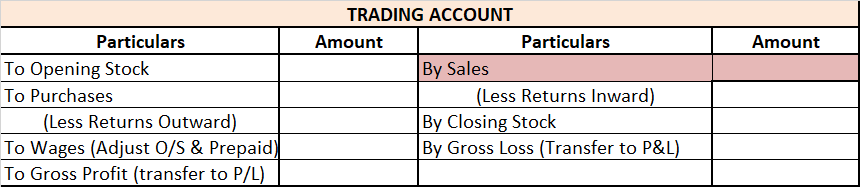
    Treatment of sales revenue in the financial statement, since sales are part of a trading account and appear on the credit side of the trading account.

    2. DIVIDEND RECEIVED

    Naina, this can be explained in simple terms. Suppose you own shares of a company which declares dividend so the dividend received is income for you. Since it does not reduce the assets of a company nor creates a liability it is shown as income and posted on the credit side of profit & loss A/c.

    Let me give you a short example of a dividend received, suppose you own 1000 shares of ABC.ltd. the company at the quarter-end calculate its earnings and decides to declare a dividend of Rs 5 per share. Therefore you would receive 1000* 5 i.e Rs 5000 as dividend income.

    3. INTEREST INCOME EARNED

    Interest income is the earnings the entity receives on any investments made. To be more precise it is money earned by an individual or business for lending their fund either by putting them as deposit in the bank. It is shown on the credit side of the profit & loss A/c.

    A very simple example for interest earned is when a business or an individual deposits money in the bank as savings and decided not to touch it for the coming years then such a depositor will gain interest on such savings by the bank. such type of income so received is treated as interest received and shown as income in the profit & loss A/c.

    3. RENT RECEIVED

    When money is received by the business for exchange of use of assets of the business by the other person, then it will be called rent received. Rent can be received by the business firm in respect of land, building, machinery, etc. As rent received is income for the business firm, it is shown on the credit side of profit & loss A/c.

    For example, X. ltd received Rs 20,000 via cash on one of its properties to Mr. Z. Then rent so received shall be treated as income in the books of ABC. ltd and same shall be treated as income and shown in the profit & loss statement.

    Summarised extract of profit & loss account is shown below for dividend received, Rent received and interest earned.


    See less
    • 0
    • Share
      Share
      • Share on Facebook
      • Share on Twitter
      • Share on LinkedIn
      • Share on WhatsApp
Astha
AsthaLeader
In: 1. Financial Accounting > Financial Statements

Explain provisional financial statements?

  • 1 Answer
  • 0 Followers
Answer
  1. Karan B.com and Pursuing ACCA
    Added an answer on July 28, 2021 at 9:16 am
    This answer was edited.

    Provisional financial statements are prepared on the basis of past data i.e. for the period which is already over. For example, the bank requested for Q4 financial statement but there were still 15 days left for the quarter to get over. In this case, the business/company will prepare a provisional fRead more

    Provisional financial statements are prepared on the basis of past data i.e. for the period which is already over. For example, the bank requested for Q4 financial statement but there were still 15 days left for the quarter to get over. In this case, the business/company will prepare a provisional financial statement.

    Provisional financial statements can be requested by banks, investors, and large vendors while making decisions regarding business and want current financial statements which can be obtained easily.

    It is prepared with the help of past actual figures on a particular date or before the end of a financial statement. The main purpose of preparing is to show the company’s financial position on a particular date. Items of the provisional financial statement are assets, liabilities, and equity/capital.

    See less
    • 0
    • Share
      Share
      • Share on Facebook
      • Share on Twitter
      • Share on LinkedIn
      • Share on WhatsApp
Manvi
Manvi
In: 1. Financial Accounting > Accounting Terms & Basics

What is the difference between discount received and discount allowed?

  • 1 Answer
  • 0 Followers
Answer
  1. Karan B.com and Pursuing ACCA
    Added an answer on August 18, 2021 at 4:13 pm
    This answer was edited.

    Discount received is the reduction in the price of the goods and services which is received by the buyer from the seller. It is an income for the buyer and is credited to the discount received account and credited to the seller/supplier’s account. Journal entry for discount received as per modern ruRead more

    Discount received is the reduction in the price of the goods and services which is received by the buyer from the seller. It is an income for the buyer and is credited to the discount received account and credited to the seller/supplier’s account.

    Journal entry for discount received as per modern rules:

    Creditor’s A/c Debit Decrease in liability
            To Cash A/c Credit Decrease in asset
            To Discount Received A/c Credit Increase in income
    (Being goods purchased and discount received)

    Discount allowed is the reduction in the price of the goods which is granted by the seller to the buyer on prompt payment of their account. It is an expense for the seller and is debited to the discount allowed account and credited to the buyer’s account.

    Journal entry for discount allowed as per modern rules:

    Cash A/c Debit Increase in asset
    Discount Allowed A/c Debit Increase in expense
        To Debtor’s A/c Credit Decrease in asset
    (Being goods sold and discount allowed)

    For example, A Ltd. offers a 10% discount to the customers who settle their debts within two weeks. Mr.B a customer purchased goods worth Rs.20,000.

    According to modern rules, A Ltd will record this sale as:

    Particulars Amt Amt
    Cash A/c                                    Dr. 8,000
    Discount Allowed A/c             Dr. 2,000
                To Mr.B’s A/c 10,000


    Mr.B will record this purchase as:

    Particulars Amt Amt
    A Ltd A/c                                    Dr. 10,000
       To Cash A/c 8,000
       To Discount Received A/c 2,000

    For a business, the discount received is an income, and the discount allowed is an expense. In the above example, A Ltd has granted a discount and B is the receiver of the discount. Hence, for A Ltd discount allowed is an expense and for B discount received is an income.

    See less
    • 0
    • Share
      Share
      • Share on Facebook
      • Share on Twitter
      • Share on LinkedIn
      • Share on WhatsApp
Karan
Karan
In: 1. Financial Accounting > Subsidiary Books

What are secondary books of accounts?

  • 1 Answer
  • 0 Followers
Answer
  1. Ayushi Curious Pursuing CA
    Added an answer on October 19, 2021 at 7:56 am
    This answer was edited.

    Secondary books of accounts are most commonly known as subsidiary books of accounts or day books. They are prepared to record the same type of journals in an ordered manner in a special book. They are nothing, but special journals. Recording all the journals entries in a single journal and these posRead more

    Secondary books of accounts are most commonly known as subsidiary books of accounts or day books. They are prepared to record the same type of journals in an ordered manner in a special book. They are nothing, but special journals.

    Recording all the journals entries in a single journal and these posting them to different ledgers can be very difficult if the number of transactions is huge.

    So, recording the same type of transactions in a special journal proves to be useful in efficient book-keeping and also information retrieval.

    There are eight subsidiary books:

    1. Cashbook – It is three types. (a) Single column cash book – It records only cash receipts and cash payments. (b) Double column cash book – Apart from cash receipts and cash payments, it also records bank receipts and bank payments. (c) Triple column cash book – It additionally records the discount allowed and discount received.
    2. Purchase book – It records all the credit purchases except the purchase of assets.
    3. Sales book – It records all the credit sales except the sale of assets.
    4. Purchase return book – It records all the transactions related to the return of purchased goods.
    5. Sale return book – It records all the transactions related to the return of goods from customers.
    6. Bills receivable book – It records the particulars of all the bills drawn in favour of the business.
    7. Bills payable book – It records the particulars of all the bills drawn in the name of the business.
    8. Journal proper – It records those transactions which cannot be recorded in any of the above-mentioned books. For example, entry related to depreciation charged on assets.


    Also, there are a few more things to know:-

    1. Subsidiary books may look like ledger accounts but they are not ledgers. Ledgers are books of final entry and subsidiary books can be said to be the book of intermediate entry and are not but special journals.
    2. Once transactions are recorded in the subsidiary books, they are then posted to the ledgers.
    See less
    • 0
    • Share
      Share
      • Share on Facebook
      • Share on Twitter
      • Share on LinkedIn
      • Share on WhatsApp
AbhishekBatabyal
AbhishekBatabyalHelpful
In: 1. Financial Accounting > Accounting Terms & Basics

What is capital maintenance?

  • 1 Answer
  • 0 Followers
Answer
  1. Radhika
    Added an answer on December 12, 2021 at 2:11 pm
    This answer was edited.

    Capital maintenance is a principle that states profit should not be recorded until its cost or capital has been maintained. In other words, profit should not be recognized unless net assets have been maintained. Capital maintenance states that profit recognized is the increase in the value of net asRead more

    Capital maintenance is a principle that states profit should not be recorded until its cost or capital has been maintained. In other words, profit should not be recognized unless net assets have been maintained.

    Capital maintenance states that profit recognized is the increase in the value of net assets. However, there are two exceptions to it:

    • Cash increased because of sale of stock to shareholders
    • Cash decreased because of dividend payout to its shareholders

    It is important because:

    • It protects the interest of shareholders
    • It protects the interest of creditors
    • Accurately analyzing the performance of the company

    Capital maintenance is of two types:

    • Financial Capital Maintenance

    It is measured by the value of assets at the beginning and end of the financial year.

    • Physical Capital Maintenance

    It is measured by the production capacity at the beginning and end of the financial year.

    Capital maintenance is concerned with keeping proper account balances of assets and not the physical assets.

    Inflation is the increase in the economic value of goods due to the lower purchasing power and not an actual increase in the value of assets. So, if the value of an asset is increased due to inflation it does not depict the right picture for the company.

    Hence, if the value of assets increases due to inflation, companies need to adjust the value of assets to assess if capital maintenance has occurred. 


    See less
    • 0
    • Share
      Share
      • Share on Facebook
      • Share on Twitter
      • Share on LinkedIn
      • Share on WhatsApp
Rahul_Jose
Rahul_Jose
In: 1. Financial Accounting > Miscellaneous

Can assets ever have a credit balance?

  • 1 Answer
  • 0 Followers
Answer
  1. Radhika
    Added an answer on December 12, 2021 at 6:32 am
    This answer was edited.

    An asset is a resource in the name of the company or controlled by the company that holds economic value and will provide it future benefits. A company invests in various kinds of assets for manufacturing purposes and investment purposes as well. Some examples of assets are: Plant and Machinery InveRead more

    An asset is a resource in the name of the company or controlled by the company that holds economic value and will provide it future benefits.

    A company invests in various kinds of assets for manufacturing purposes and investment purposes as well. Some examples of assets are:

    • Plant and Machinery
    • Investments
    • Inventory
    • Cash and Cash Equivalents, etc.

    Assets can be broadly divided into two categories based on their physical existence:

    • Tangible Assets
    • Intangible Assets

    Tangible Assets can be further divided into two categories based on their life and role in the operating cycle:

    • Non-Current Assets
    • Current Assets

    Since the company derives benefit from the asset, an asset account is debit in nature. If an asset account has a credit balance, it would fundamentally make it a liability. However, there are certain exceptions to it.

    In the case of Bank Overdraft, which means a company withdraws more from the bank than it has deposited in its account, Bank Account can also be shown having a credit balance.

    Contra Assets Accounts are the accounts that are contrary to the basic nature of an assets account, that is it is contrary to the debit nature of the assets account and hence are credit in nature.

    Examples of Contra Assets Account are:

    Accumulated Depreciation Account which is essentially Plant Assets Account also has a credit balance as it is used to depreciate the asset, or in other words, reduce the value of the assets, hence it also has a credit balance.

    When there are balances in the Account Receivables Account that are not paid to the company or have a very low probability of being paid, they are recorded in a separate account called Bad Debts Account, which is also credit in nature.


    See less
    • 0
    • Share
      Share
      • Share on Facebook
      • Share on Twitter
      • Share on LinkedIn
      • Share on WhatsApp
Bonnie
BonnieCurious
In: 1. Financial Accounting > Goodwill

How to do Valuation of Goodwill?

  • 1 Answer
  • 0 Followers
Answer
  1. AishwaryaMunot
    Added an answer on July 15, 2022 at 5:09 am

    Before we jump in the concept of valuation of Goodwill, let us first understand the meaning of term “Goodwill”. Goodwill is an Intangible asset of the business. As the definition of Intangible asset, Goodwill cannot be seen or felt. In simple words it is business’s worth or its reputation earned oveRead more

    Before we jump in the concept of valuation of Goodwill, let us first understand the meaning of term “Goodwill”.

    Goodwill is an Intangible asset of the business. As the definition of Intangible asset, Goodwill cannot be seen or felt. In simple words it is business’s worth or its reputation earned over a period of time.

    Calculation of value of the goodwill in monetary terms is done at the time of merger or acquisition of the business. Goodwill is often applied to businesses which are earning large number of profits, have crucial corporate links and large customer/client base.

    Self-earned goodwill is never shown in monetary terms in business’s own balance sheet while goodwill which is purchased is shown in the asset side of the balance sheet of the buyer business.

    Following are the methods under which goodwill can be valued:

    1. Average Profit Method – In this method, Goodwill is calculated by average profits multiplied by the number of years purchased. Typically, last 5-6 years profit figures are taken ignoring any abnormal gains or loss during the year. Formula for the same would be as follows:

               Goodwill = Average Profit x No. of Years Purchase

    1. Weighted Average Method – This method is updated method of average profit method, Profits of the previous years are calculated by specific number of weights. This method is useful when there is a lot of fluctuations in the profits and importance has to be given to current year’s profit. Formula for the same would be as follows:

              Goodwill = Weighted Average Profit x No. of Years Purchase

    Where,

    Weighted Average Profit = Sum of Profits multiplied by weights / Sum of Weights

    1. Super Profit Method – Super profit is additional profit generated by the business over normal profit. Further for the calculation, Super profit is capitalized by the normal rate of return and resulting figure is value of Goodwill.

    Formula for the same would be as follows:

             Goodwill = Super Profits x (100/Normal Rate of Return)

    1. Annuity Method – In this method, Discounted amount of the super profits is calculated by taking into consideration the current value of the annuity at rate of return.

    Formula for the same would be as follows:

             Goodwill = Super Profit x Discounting Factor

    1. Capitalization Method – In this method, existing capital employed is deducted from capitalized number of average profits or super profits. The resulting figure is Goodwill.

    Formula for the same would be as follows:

               a. Average Profit Capitalization Method –

                 Goodwill = [Average Profit / Normal Rate of Return x 100] – Capital                                                        Employed

               b. Super Profit Capitalization Method –

                Goodwill = Super Profits x (100/ Normal Rate of Return)

    See less
    • 0
    • Share
      Share
      • Share on Facebook
      • Share on Twitter
      • Share on LinkedIn
      • Share on WhatsApp
Anushka Lalwani
Anushka Lalwani
In: 1. Financial Accounting > Accounting Terms & Basics

What is the meaning of sundry creditors?

  • 1 Answer
  • 0 Followers
Answer
  1. AbhishekBatabyal Helpful Pursuing CA, BCOM (HONS)
    Added an answer on August 13, 2022 at 7:47 am
    This answer was edited.

    Meaning The term ‘Sundry creditors’ consist of two words:  ‘Sundry’ and ‘creditors’.  The word ‘sundry’ means the items which are not significant enough to be named separately. It also refers to a collection of miscellaneous items. Creditors are the person from whom money is borrowed or goods are puRead more

    Meaning

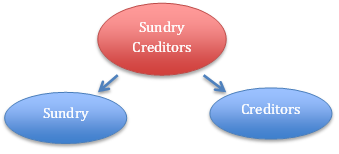
    The term ‘Sundry creditors’ consist of two words:  ‘Sundry’ and ‘creditors’. 

    The word ‘sundry’ means the items which are not significant enough to be named separately. It also refers to a collection of miscellaneous items.

    Creditors are the person from whom money is borrowed or goods are purchased on credit by a business or a non-business entity. They have to be repaid after a period of time which is usually less than or up to one year.

    By combining the meaning of both words, ’sundry’ and ‘creditor’, the term ‘sundry creditor’ will refer to the collection of insignificant creditors of an entity.

    Back in the days when accounting records were maintained on paper, only the records of those creditors were maintained separately, from whom goods are purchased regularly and in large amounts. 

    But there used to be numerous other creditors with whom the transactions were occasional and insignificant. To reduce the paperwork, records of all such creditors were maintained on a single page or book under the head ‘Sundry Creditors’

    Nowadays, as accounting records are maintained digitally, hence maintaining records of each and every creditor is not a problem. 

    Hence, every creditor whether small or big, is grouped under the head ‘Sundry creditor’ or ‘Trade Creditor’.


    Accounting Treatment 

    Sundry creditors are the persons to whom a business owes money. 

    Hence, as per golden rules of accounting, Sundry creditor is a personal account and the golden rule for personal account is, ‘Debit the receiver and credit the giver’ 

    We know sundry creditors are liabilities, hence, as per modern rule of accounting, sundry creditors are credited in case of increase and debited in case of decrease.

    Example, a business purchased goods for Rs. 10,000 from ABC & Co. The journal entry will as follows:

    Here, ABC & Co is the creditor. It is credited as it is a personal account and the creditor has given the goods to the business, hence the giver is credited.

    From point of view of modern rules of accounting, ABC & Co. is a creditor, a liability. On purchase of goods on credit, a liability is created. Hence, ABC & Co A/c is credited.


    Balance sheet

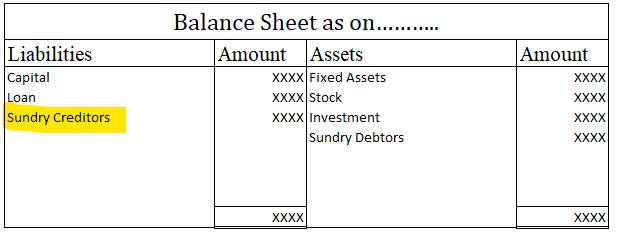
    Sundry creditor is a current liability, so it is shown on the liabilities side of a balance sheet. Trade payable and accounts payable mean sundry creditors only.

    See less
    • 0
    • Share
      Share
      • Share on Facebook
      • Share on Twitter
      • Share on LinkedIn
      • Share on WhatsApp

Sidebar

Question Categories

  • 1. Financial Accounting

      • Accounting Terms & Basics
      • Bank Reconciliation Statement
      • Banks & NBFCs
      • Bills of Exchange
      • Capital & Revenue Expenses
      • Consignment & Hire Purchase
      • Consolidation
      • Contingent Liabilities & Assets
      • Departments & Branches
      • Depreciation & Amortization
      • Financial Statements
      • Goodwill
      • Insurance Accounting
      • Inventory or Stock
      • Investment Accounting
      • Journal Entries
      • Ledger & Trial Balance
      • Liquidation & Amalgamation
      • Miscellaneous
      • Not for Profit Organizations
      • Partnerships
      • Ratios
      • Shares & Debentures
      • Source Documents & Vouchers
      • Subsidiary Books
  • 2. Accounting Standards

      • AS
      • IFRS
      • IndAS
  • 3. Cost & Mgmt Accounting
  • 4. Taxes & Duties

      • GST
      • Income Tax
  • 5. Audit

      • Bank Audit
      • Internal Audit
      • Miscellaneous - Audit
      • Statutory Audit
  • 6. Software & ERPs

      • Tally
  • 7. MS-Excel
  • 8. Interview & Career
  • Top Questions
  • I need 20 journal entries with ledger and trial balance?

  • Can you show 15 transactions with their journal entries, ledger, ...

  • What is furniture purchased for office use journal entry?

  • What is loose tools account and treatment in final accounts?

  • What is the Journal Entry for Closing Stock?

  • What is the journal entry for goods purchased by cheque?

  • What is commission earned but not received journal entry?

  • How to show adjustment of loose tools revalued in final ...

  • What is the journal entry for interest received from bank?

  • Following is the Receipts and Payments Account of Bharti Club ...

Hot Topics

Accounting Policies Accounting Principles Balance Sheet Bank Reconciliation Statement Bill of Exchange Branch Accounting Calls in Advance Capital Capital Expenditure Companies Act Compound Entry Consignment Creditors Current Assets Debit Balance Debtors Depreciation Difference Between Dissolution of Firm Dissolution of Partnership Drawings External Users Fictitious Assets Final Accounts Financial Statements Fixed Assets Fixed Capital Fluctuating Capital Gain Impairment Installation Interest Received in Advance Internal Users Journal Entry Ledger Loose Tools Miscellaneous Expenditure Profit Rent Rent Received in Advance Reserves Revaluation Revenue Expenditure Revenue Reserve Sacrificing Ratio Subscription Subscription Received in Advance Trial Balance Type of Account Uncalled Capital
  • Home
  • Questions
    • Most Visited
    • Most Active
    • Trending
    • Recent
  • Follow
    • Categories
    • Users
    • Tags
  • Write an Answer
  • Badges & Points
  • Request New Category
  • Send a Suggestion

Most Helping Users

Astha

Astha

  • 50,291 Points
Leader
Simerpreet

Simerpreet

  • 72 Points
Helpful
AbhishekBatabyal

AbhishekBatabyal

  • 65 Points
Helpful

Footer

  • About Us
  • Contact Us
  • Pricing
  • Refund
  • Forum Rules & FAQs
  • Terms and Conditions
  • Privacy Policy
  • Career

© 2021 All Rights Reserved
Accounting Capital.