

Accrued expenses are those expenses that have already been incurred but not paid. The business has already received the benefit of these goods or services but is yet to pay for them. For example, X Ltd took an insurance policy on 30th September 20XX. The premium is to be paid annually on 30th SeptemRead more
Accrued expenses are those expenses that have already been incurred but not paid. The business has already received the benefit of these goods or services but is yet to pay for them.
For example,
- X Ltd took an insurance policy on 30th September 20XX. The premium is to be paid annually on 30th September every year for the next 20 years.
- While preparing the financial statements for the year 20XX – 20XX+1, the business will recognize insurance premiums for the period 30th September, 20XX to 31st March 20XX+1 as an accrued expense. The premium would be actually paid on September 20XX+1.
- As we can see, the company has already incurred the insurance premium for the period 30th September, 20XX to 31st March 20XX+1.
- Thus, it has to recognize the same as an expense of that period only even though it will be actually paid in the next accounting period.
Why does the concept of accrued expenses arise in accounting?
The concept of accrued expenses arises in accounting because accounting records transactions on an accrual and not cash basis.
Accounting on an accrual basis implies recording transactions as and when they are incurred while recording transactions on a cash basis means recording them as and when cash is actually paid for receiving those services.
For example,
- X Ltd ordered 5 televisions from LG. It received the delivery of all 5 televisions on 1st March, 20XX. However, it received the invoice for those televisions on 31st April, 20XX.
- Now, the question arises as to whether while preparing the financial statements on 31st March, 20XX, X Ltd will recognize the cost of those 5 televisions as a purchase expenditure.
- If X Ltd were recording transactions on a cash basis, they would not have recognized the cost of those 5 televisions as a purchase expenditure in the financial statements prepared on 31st March 20XX as the payment had been made in the next financial year.
- Thus, in that case, that purchase would be recorded in the financial statements of the next year.
- However, accounting is done on an accrual basis. As per accrual basis, as the event of purchase has occurred during the financial year ending 31st March 20XX, it must be recorded in financial statements for that period only.
- Thus, due to the accrual basis, X Ltd will record that expenditure in the financial statements prepared on 31st March 20XX even though cash has been paid in the next financial year.

Treatment of Accrued Expenses
Accrued expenses are classified as current liabilities. That is because the business has a short-term obligation to pay these expenses. The other party has a legal right to receive the amount due. In other words, accrued expenses become payable in the near term.
As current liabilities, accrued expenses are carried in the balance sheet on the liabilities side. They are also recognized in the income statement as an expense as per the concept of accrual basis of accounting.
Conclusion
Accrued expenses are the expenses for which the business has already received the benefit of goods or services but which are payable in an accounting period other than the one in which such benefit is received.
As per the accrual basis of accounting, they are recognized in the year in which the expense is incurred. The expense is carried forward as a current liability until the period in which it is actually paid.
See less







The land is a fixed asset and is treated as a long-term asset account. Explanation The land is a fixed asset which is also referred to as a long-term asset. The fixed assets are those assets that are not expected to be cashed, consumed, last, sold, or written off within one accounting year and areRead more
The land is a fixed asset and is treated as a long-term asset account.
Explanation
The land is a fixed asset which is also referred to as a long-term asset.
The fixed assets are those assets that are not expected to be cashed, consumed, last, sold, or written off within one accounting year and are purchased for long-term use. The fixed assets are also called non-current assets and the reason behind it is that current assets are easily converted into cash within one year and they are not.
Fixed assets are planned by the company to be used for the long term in order to generate income.
Example- Land, building, furniture, plants & equipment, etc.
Why is land an asset?
Although the land is not depreciated, it is still considered to be an asset because just like other assets the business spends its own money to acquire it.
It can also be used by the business for different operations and it doesn’t create any liability for the business. Instead, reselling the land after a few years can help the company earn a huge margin of profit.
Land in the balance sheet
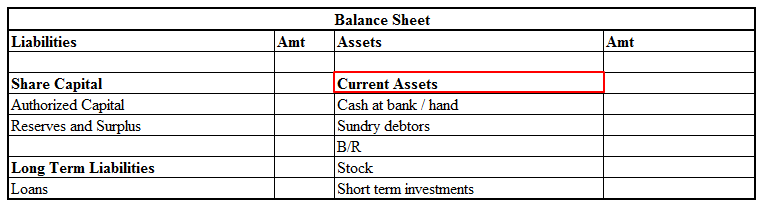
On the asset side of the balance sheet, the land is stated under the heading long-term assets.
Balance Sheet (for the year…)
Therefore, the land is a fixed asset and is treated as a long-term asset account.
See less