


Meaning We know that an account in ledger format has two amount columns i.e. debit and credit amount columns. Now, most of the time, the total of debit and credit sides do not match. The difference between their totals is called the balance of the account and it is posted on the shorter side. ThisRead more
Meaning
We know that an account in ledger format has two amount columns i.e. debit and credit amount columns. Now, most of the time, the total of debit and credit sides do not match. The difference between their totals is called the balance of the account and it is posted on the shorter side. This result in equalling the total of both sides, hence this act is called ‘balancing an account.
Types of balances
Balancing an account is a very usual practice so that the balance of an account can be known. An account can have two types of balances:
- Debit balance, where the debit side total is more than the credit side total.
- Credit balance, where the credit side is more than the debit side total.
The balance of an account is posted on the shorter side. It means:
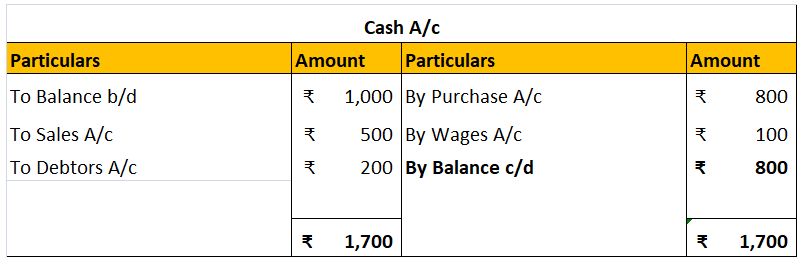
- The debit balance will be shown on the credit side as the credit side total is shorter. (posted as ‘By Balance c/d’)
- The credit balance will be shown on the debit side as the debit side total is shorter (posted as ‘To Balance c/d’)
Example
The following is a cash account that is not balanced:
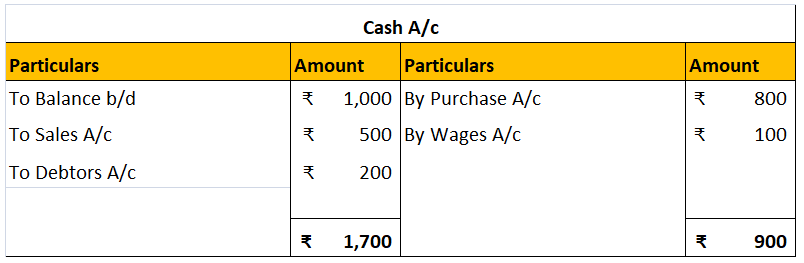
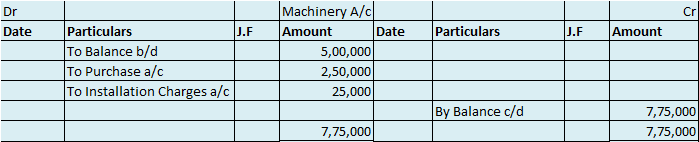
We can see the debit side is ₹800 more than the credit side. It means there is a debit balance. It will be posted on the credit side as ‘By balance c/d’ to balance the account.
Exceptions
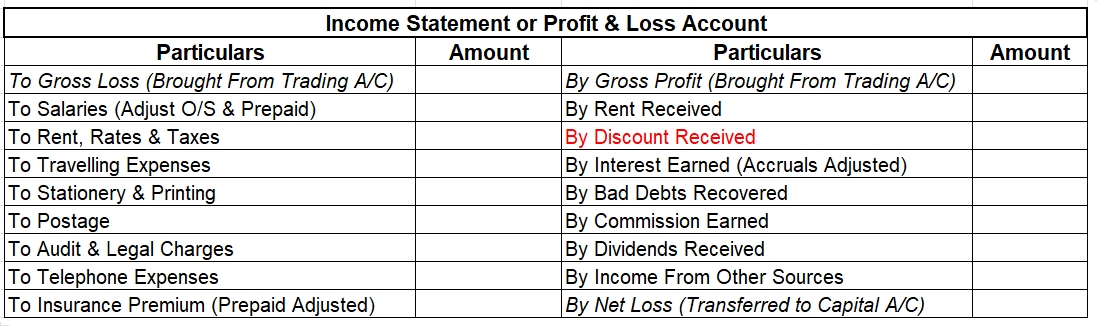
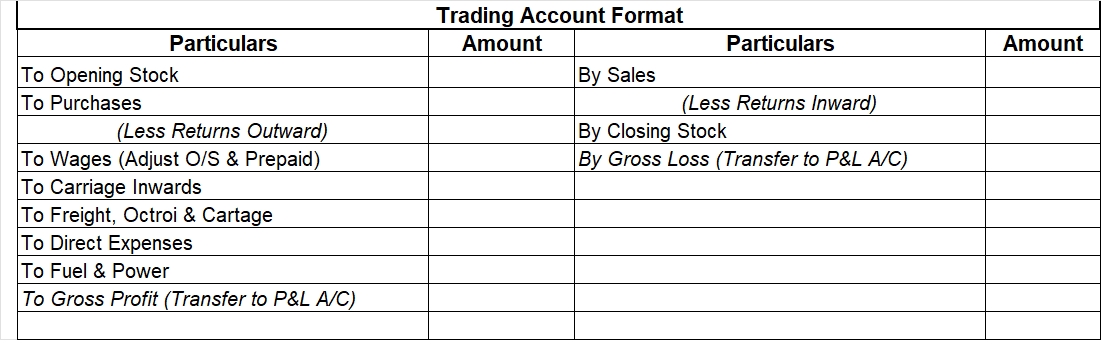
Balance of the income and the expense accounts (nominal accounts)are not computed. Instead, they are closed to trading account or profit and loss account to balance their amount totals. For example, the salaries account and sales accounts
Only the balance of the following types of accounts are computed and carried forwarded to successive accounting years:
- Assets
- Liabilities
- Capital
The balance of these accounts is shown on the trial balance and balance sheet as well.
See less












Yes, Accounts Payable can have a Debit balance. Accounts payable is a liability and thus, has a credit balance but can have a debit balance in case the creditor is overpaid or when there is purchase return (for already-paid goods) ACCOUNTS PAYABLE Accounts payable refers to all short-term liaRead more
Yes, Accounts Payable can have a Debit balance. Accounts payable is a liability and thus, has a credit balance but can have a debit balance in case the creditor is overpaid or when there is purchase return (for already-paid goods)
ACCOUNTS PAYABLE
Accounts payable refers to all short-term liabilities of the business that are to be paid. These are usually paid within a duration of 90 days. It includes both Trade payable (goods and services purchased on credit) as well as expenses payable (used but payment not made yet) like rent payable, electricity bill, etc.
Businesses cannot make every payment on the spot. There can be cases when the business is facing a shortage of funds, can have funds but doesn’t have enough cash (or liquid funds) to make payment or simply doesn’t want to make payment on the spot to reduce its capital requirement.
So, like us businessmen also purchase goods on credit or use services for which payment is to be made soon. All these are liabilities for the business.
However, they must be related to the business to be considered as accounts payable.
DEBIT BALANCE OF ACCOUNTS PAYABLE
Debit balance of accounts payable means money owed by others. There is Debit balance when
OVERPAYMENT is made to the creditors or the supplier. It happens when the wrong amount is paid or payment is made twice for the same transaction.
Suppose you need to pay $10,000 as rent within 30 days. After 25 days you mistakenly made a payment of $12,000.
In this case,
PURCHASE RETURN of already paid goods also result in debit balance of Accounts Payable.
Suppose you bought goods worth $50,000 from Mr A on credit and paid for the same. Later, you returned all the goods because they were defective. Now, there will be Debit balance of Accounts Payable till there is a full refund of $50,000 by Mr A.
How is Accounts Payable Treated Normally?
Accounts Payable are the current liabilities of the firm and are shown under the head Current Liabilities in the Balance Sheet. Its liability, thus has a credit balance which represents the amount owed by the firm to others. It is credited when increases and debited when decreases.
For example – Suppose you purchased goods worth $30,000 and agreed to pay after 30 days. So, Accounts payable will be credited by $30,000 and purchases will be debited by $30,000.
Purchases A/c – $30,000 (debit)
To Accounts Payable A/c – $30,000
After 30 days payment is made in cash, which means the liability decreased. So, Accounts Payable A/c will be debited.
Accounts Payable A/c – $30,00
To Cash – $30,000
See less