Please briefly explain why you feel this question should be reported.

Please briefly explain why you feel this answer should be reported.

Please briefly explain why you feel this user should be reported.

Sign InSign Up

AccountingQA

AccountingQA Logo AccountingQA Logo

AccountingQA Navigation

  • Home
  • Ask Questions
  • Write Answers
  • Explore
  • FAQs
Search
Ask A Question

Mobile menu

Close
Ask a Question
  • Home
  • Questions
    • Most Visited
    • Most Active
    • Trending
    • Recent
  • Follow
    • Categories
    • Users
    • Tags
  • Write an Answer
  • Badges & Points
  • Request New Category
  • Send a Suggestion
  • Search Your Accounting Question..

  • Most Visited
  • Most Voted
  • Followed Questions
  • Most Answered
  • No Answers

AccountingQA Latest Questions

Ishika Pandey
Ishika PandeyCurious
In: 1. Financial Accounting > Miscellaneous

Why is profit and loss suspense an asset?

  • 0 Answers
  • 1 Follower
Answer
Simerpreet
SimerpreetHelpful
In: 1. Financial Accounting > Accounting Terms & Basics

What is debit balance class 11?

  • 1 Answer
  • 5 Followers
Answer
  1. Ishika Pandey Curious ca aspirant
    Added an answer on February 14, 2023 at 2:55 am
    This answer was edited.

    Definition Debit balance may arise due to timing differences in which case income will be accrued at the year's end to offset the debit. The amount is shown in the record of a company s finances, by which its total debits are greater than its total credits. The account which has debit balances are aRead more

    Definition

    Debit balance may arise due to timing differences in which case income will be accrued at the year’s end to offset the debit.

    The amount is shown in the record of a company s finances, by which its total debits are greater than its total credits.

    The account which has debit balances are as follows:

    • Assets accounts
    Land, furniture, building machinery, etc

    • Expenses accounts
    Salary, rent, insurance, etc

    • Losses
    Bad debts, loss by fire, etc

    • Drawings
    Personal drawings of cash or assets

    • Cash and bank balances
    Balances of these accounts

    In class 11th, we learned about all these accounts that have debit balances.
    Where the total of the debit side is more than the credit side therefore the difference is the debit balance and is placed credit side as “ by balance c/d “

    Here are some examples showing the debit balances of the accounts :

    See less
    • 6
    • Share
      Share
      • Share on Facebook
      • Share on Twitter
      • Share on LinkedIn
      • Share on WhatsApp
Aadil
AadilCurious
In: 1. Financial Accounting > Journal Entries

What is the journal entry for cash sales?

  • 1 Answer
  • 0 Followers
Answer
  1. Simerpreet Helpful CMA Inter qualified
    Added an answer on August 7, 2021 at 1:33 pm
    This answer was edited.

    The journal entry for Cash Sales is- Particulars Amount Amount Cash A/c                                                      Dr $$$      To Sales A/c $$$ Sales Account is a Revenue Account and Cash Account is an Asset Account for the business. So, According to the modern approach for Sales account:Read more

    The journal entry for Cash Sales is-

    Particulars Amount Amount
    Cash A/c                                                      Dr $$$
         To Sales A/c $$$

    Sales Account is a Revenue Account and Cash Account is an Asset Account for the business.

    So, According to the modern approach for Sales account:

    • When there is an increase in the Revenue, it is ‘Credited’.
    • When there is a decrease in the Revenue, it is ‘Debited’.


    According to the Modern approach for Cash  account:

    • When there is an increase in the Asset, it is ‘Debited’.
    • When there is a decrease in the Asset, it is ‘Credited’.


    So, the journal entry here is about cash sales and since there is an increase in Revenue on account of goods being sold, the sales account will be credited as per the modern rule and due to the increase in cash on account of sales, cash account will be debited.

    For Example, Polard sold goods for cash worth Rs 2,000 for his business.

    I will try to explain it with the help of steps.

    Step 1: To identify the account heads.

    In this transaction, two accounts are involved, i.e. Cash A/c and Sales A/c.

    Step 2: To Classify the account heads.

    According to the modern approach: Sales A/c is a Revenue account and Cash A/c is an Asset account.

    Step 3: Application of Rules for Debit and Credit:

    According to the modern approach: As Sales increases, because goods have been sold, ‘Sales A/c’ will be credited. (Rule – increase in Revenue is credited).

    Cash account is an Asset account. As cash has been received on account of goods sold, there is an increase in assets and hence Cash account will be debited (Rule – increase in Asset is debited).

    So from the above explanation, the Journal Entry will be-

    Particulars Amount Amount
    Cash A/c                                                      Dr 2,000
         To Sales A/c 2,000


    See less
    • 0
    • Share
      Share
      • Share on Facebook
      • Share on Twitter
      • Share on LinkedIn
      • Share on WhatsApp
Anushka Lalwani
Anushka Lalwani
In: 1. Financial Accounting > Accounting Terms & Basics

Can you explain interest on drawings?

  • 1 Answer
  • 0 Followers
Answer
  1. GautamSaxena Curious .
    Added an answer on July 25, 2022 at 8:39 pm
    This answer was edited.

    Interest on drawings Drawings refer to the money withdrawn by owners/partners for personal use from the business. The drawings, in accounting terms, can be of any type. It can be cash withdrawn from business or furniture or car etc. Drawings are money or assets that are withdrawn from a company by iRead more

    Interest on drawings

    Drawings refer to the money withdrawn by owners/partners for personal use from the business. The drawings, in accounting terms, can be of any type. It can be cash withdrawn from business or furniture or car etc. Drawings are money or assets that are withdrawn from a company by its owners for personal use and must be recorded as a reduction of assets. It’s paid back to the business with some interest.

    Interest on drawings is an income for the business and reduces the capital of the owner. Interest on drawings is the amount of interest paid by the partners, calculated concerning the period for which the money was withdrawn.

    • It’s an income for the business. Hence, credited to P&L Appropriation A/c.
    • It’s an expense for the owner/partner. Therefore, debited to owner’s/partner’s capital a/c
    • Interest on drawings is charged to the partners only when there is an agreement made among the partners in this regard or if it is mentioned in the Partnership Deed.

    Formulae for Interest on drawings

    There are three formulae used for calculating the interest on drawings. They are:

    1. Simple Method: In this method, as the name suggests, the amount of interest on drawings is calculated simply for the time the amount has been utilized.

    Interest on Drawings = Amount of drawings × Rate/100 × No. of Months/12 

    2. Product Method: This method is used when-

    • Drawings are made of unequal amounts at irregular intervals of time. Then this formula is used-

    Interest on Drawings = Total of Products × Rate/100 × 1/12

    • When drawings are made of equal amounts at regular/equal intervals of time. Then interest on drawings can be calculated on the total of the amount drawn, for the average of the period applicable to the first and last installment.

    Interest on Drawings= Total amount of drawings × Rate/ 100 × Average Period/12

    Also, note-

    Average Period = (No. of months left after first drawings+ No. of months left after last drawings)/2

    Example:

    Harish withdrew equal amounts at the beginning of every month for 9 months. Total drawings amounted to ₹6,000. Calculate the interest on drawings charged if the rate was 6% p.a.

    Solution:

    Average period = (No. of months left after first drawings+ No. of months left after last drawings)/2 = (9+1)/2 = 5 months 

    Interest on Drawings = Total of drawings × Rate/100 × 5/12

                                            = ₹ 6,000 × 6/100 × 5/12
                                            = ₹ 150.

    Journal entry for interest on drawings: 

    Interest transferred to Profit & Loss A/c:


    See less
    • 0
    • Share
      Share
      • Share on Facebook
      • Share on Twitter
      • Share on LinkedIn
      • Share on WhatsApp
Ayushi
AyushiCurious
In: 1. Financial Accounting > Accounting Terms & Basics

What is managerial remuneration?

  • 1 Answer
  • 0 Followers
Answer
  1. Pooja_Parikh Aspiring Chartered Accountant
    Added an answer on November 30, 2021 at 7:12 pm
    This answer was edited.

    The major affairs of the company are handled by the manager and hence he is entitled to receive some compensation for his efforts. This is termed Managerial Remuneration. The manager has to bring out the maximum potential of the employees while ensuring that the interests of the shareholders and othRead more

    The major affairs of the company are handled by the manager and hence he is entitled to receive some compensation for his efforts. This is termed Managerial Remuneration. The manager has to bring out the maximum potential of the employees while ensuring that the interests of the shareholders and other stakeholders are secured.

    MAXIMUM REMUNERATION

    As per section 197 of the Companies Act, the Company has certain limits on paying maximum remuneration, depending on whether he is working full-time or part-time. If the company has only one whole-time manager, he is entitled to a maximum remuneration of 5% of net profits. If there is more than one whole time manager, then the percentage increases to 10%.

    For part-time directors, the remuneration allowed is 1% of net profits (if there is a whole-time director present) and if no whole-time manager is present, then remuneration for a part-time director is 3%.

    Therefore, a company can only pay a maximum remuneration of 11% of net profits.

    A public company is allowed to pay remuneration in excess of 11% by :

    • Passing a special resolution approved by the shareholders
    • Subject to compliance with Schedule V conditions

    Remuneration can be paid to such managers who do not have any direct interest in the company and also possesses special knowledge and expertise along with a graduate-level qualification.

    PENALTY

    Any person who fails to comply with the provisions of managerial remuneration shall be punishable with a fine that can vary from Rs. 1 Lakh to a maximum of Rs. 5 Lakhs.

    However, Sec 197 applies to only public companies and hence private companies are free to pay managerial remuneration with no upper limit.

    See less
    • 0
    • Share
      Share
      • Share on Facebook
      • Share on Twitter
      • Share on LinkedIn
      • Share on WhatsApp
AbhishekBatabyal
AbhishekBatabyalHelpful
In: 1. Financial Accounting > Accounting Terms & Basics

What is the difference between operating lease and finance lease?

  • 1 Answer
  • 0 Followers
Answer
  1. Ayushi Curious Pursuing CA
    Added an answer on June 24, 2022 at 6:40 pm
    This answer was edited.

    Meaning of lease A lease is an agreement or a contract in which the right to use an asset like land, building, or machinery is given by one party to the other party for a fixed period of time against the consideration of a single payment or a series of payments. There are two parties in a lease agreRead more

    Meaning of lease

    A lease is an agreement or a contract in which the right to use an asset like land, building, or machinery is given by one party to the other party for a fixed period of time against the consideration of a single payment or a series of payments.

    There are two parties in a lease agreement:

    • Lessor: The party who gives the right to use its asset in return for a series of payments or a single payment.
    • Lessee: The party who receives the right to use the asset from the Lessor.

    This is similar to a rent agreement or contract. The only difference between lease and rent is duration. A rent agreement is generally for less than 12 months while a lease agreement is for more than 12 months like 5 years or 10 years, sometimes even for like 99years.


    Type of lease

    There are two types of lease:

    • Operating lease
    • Finance Lease


    Operating lease

    • An operating lease is a type of lease in which the possession of the leased asset is transferred back from the lessee to the lessor at the end of the lease period.
    • Here, all the risk and rewards incident to ownership remains with the lessor, not the lessee.
    • The depreciation on the leased asset in case of operating lease is not charged by the lessee to its profit and loss account as the leased asset is not shown in the balance sheet. A leased asset is an off-balance sheet item in the case of an operating lease.


    Finance lease

    • Unlike an operating lease, the ownership of the leased asset is transferred to the lessee at the end of the leased period.
    • Thus, at the inception of the lease agreement, all the risk and rewards incident to ownership is transferred from the lessor to the lessee.
    • The depreciation on the leased asset is charged by the lessee to its profit and loss account as the leased asset is shown in the balance sheet. A leased asset is a balance sheet item in the case of an operating lease.
    • Along with the leased asset, the obligation to pay the future lease payment is also shown in the balance sheet as a non-current liability or current liability as the case may be.


    Difference between operating lease and finance lease in tabular format


    See less
    • 0
    • Share
      Share
      • Share on Facebook
      • Share on Twitter
      • Share on LinkedIn
      • Share on WhatsApp
SidharthBadlani
SidharthBadlani
In: 1. Financial Accounting > Accounting Terms & Basics

What is Gross profit versus net profit?

  • 1 Answer
  • 1 Follower
Answer
  1. Ishika Pandey Curious ca aspirant
    Added an answer on February 5, 2023 at 12:58 pm
    This answer was edited.

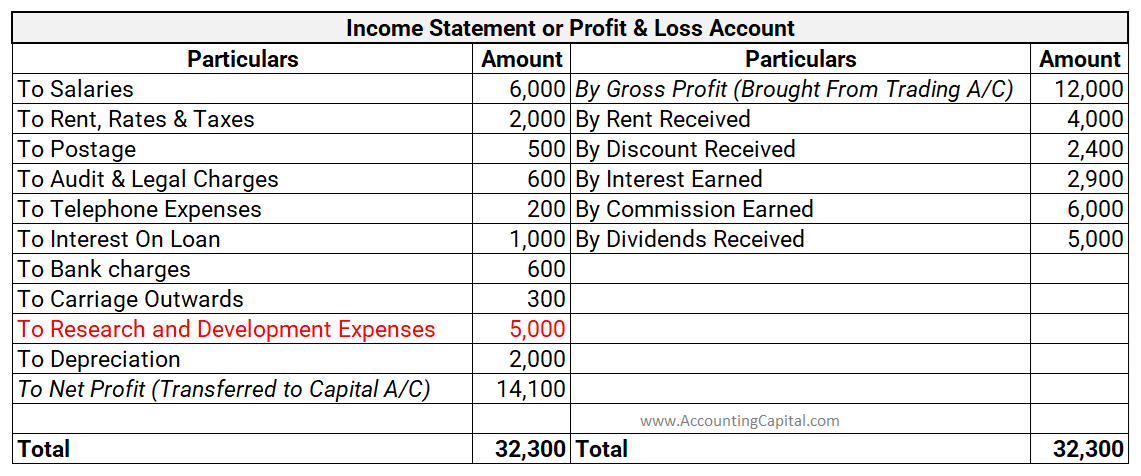
    Definition Gross profit is the excess of the proceeds of goods and services rendered during a period over their cost, before taking into account administration, selling, distribution, and financial expenses. When the result of this computation is negative it is referred to as gross loss Formula : ToRead more

    Definition

    Gross profit is the excess of the proceeds of goods and services rendered during a period over their cost, before taking into account administration, selling, distribution, and financial expenses.

    When the result of this computation is negative it is referred to as gross loss

    Formula :

    Total Revenues – Cost Of Goods Sold

    Net profit is defined as the excess of revenues over expenses during a particular period.

    When the result of this computation is negative it is called a net loss.

    Net profit may be shown before or after tax.

    Formula :

    Total Revenues – Expenses
    Or
    Total Revenues – Total Cost ( Implicit And Explicit Cost )

    The basic difference between gross profit and net profit is that gross profit estimates the profitability of a company whereas net profit is to show the performance of the company.

    Key points of Gross Profit

    Some of the key points of as for gross profits follows :

    • Stage of calculation: Gross Profit is calculated in the first stage of the Final Account.

    • Purpose of calculation: It is calculated to know the total profit earned during the particular accounting

    • Type of balance: Gross Profit shows the credit balance of the Trading Account.

    • Dimension: It is a narrow concept as it is a part of Net Profit.

    • Treatment: It is not treated directly in the balance sheet. It is transferred to the Profit And Loss Account.

    Key points of Net Profit

    Some of the key points of as for gross profits follows :

    • Stage of calculation: Net Profit is calculated in the second stage of the Final Account.

    • Purpose of calculation: It is calculated to know the net profit earned during the particular accounting

    • Type of balance: Net Profit shows the credit balance of the Profit And Loss Account.

    • Dimension: It is a wider concept as it includes Gross Profit.

    • Treatment: It is treated directly in the balance sheet by adding or subtracting from the capital.

    Examples

    Now let me explain to you by taking an example which is as follows :

    In a business organization there were the following data given as purchases made Rs 73000, inventory, in the beginning, was Rs 10000, direct expenses made were Rs 7000, closing inventory which was Rs 5000, revenue from operation during the period was Rs 100000.
    Then,
    COST OF GOODS SOLD = Purchases + Opening Inventory + Direct Expenses – Closing Inventory.
    = Rs ( 73000 + 10000+ 7000- 5000)
    = Rs 85000

    GROSS PROFIT = REVENUE – COST OF GOODS SOLD
    = Rs ( 100000 – 85000 )
    = Rs 15000

    Now from the above question keeping the gross profit same if the indirect expenses of the organization are Rs 2000 and the other income is Rs 1000.
    Then,

    NET PROFIT = GROSS PROFIT – INDIRECT EXPENSES + OTHER INCOMES
    = Rs ( 15000 – 2000 + 1000)
    = Rs 14000

    Conclusion

    So here I conclude that gross profit is the difference between revenues from sales and/or services rendered and its direct cost.

    Whereas net profit is after the deduction of total expenses from the total revenues of the enterprise.

    See less
    • 0
    • Share
      Share
      • Share on Facebook
      • Share on Twitter
      • Share on LinkedIn
      • Share on WhatsApp
Bonnie
BonnieCurious
In: 1. Financial Accounting > Accounting Terms & Basics

What is the meaning of capitalized in accounting?

  • 1 Answer
  • 0 Followers
Answer
  1. GautamSaxena Curious .
    Added an answer on August 20, 2022 at 10:34 pm

    Capitalize in Accounting The term 'capitalized' in accounting means to record an expenditure as an asset on the balance sheet. Capitalization takes place when a business buys an asset that has a useful life. The cost of the relevant asset is then allocated to expense over its useful life i.e charginRead more

    Capitalize in Accounting

    The term ‘capitalized’ in accounting means to record an expenditure as an asset on the balance sheet. Capitalization takes place when a business buys an asset that has a useful life. The cost of the relevant asset is then allocated to expense over its useful life i.e charging depreciation, etc. This means that the relevant expenditure will appear on the balance sheet instead of the income statement. The capitalizing of the expenses is a benefit for the company as the assets bought by them for the long-term are subjected to depreciation and capitalizing expenses can amortize or depreciate the costs. This process is called capitalization.

    In order to capitalize any expense, we’ll have to make sure it meets the criteria stated below.

    The assets exceeding the capitalization limit

    The companies set a capitalization limit, below which the expenses are considered too immaterial to be capitalized. Therefore, the limit is supposed to be followed and considered as it controls the capitalization of the expenses. Generally, the capitalization limit is $1,000.

    The assets have a useful life 

    The companies also seek to generate revenues for a long period of time. Thus, the asset should have a long and useful life at least a year or more. Thereby, the business can record it as an asset and depreciate it over its valuable life.

    Most of the important principles of capitalization in accounting are from the matching principle.


    Matching Principle

    The matching principle states that the expenses in the accounting should be recorded when they are incurred and not when the payment is made. This helps the business identify the amounts spent to generate revenue.

    For e.g, the company bought machinery for manufacturing goods with more efficiency. It is supposed to have a useful life for a period of over 10 years. Instead of expensing the entire cost of the machinery, the company will write off (depreciated) the cost of the asset over its useful life i.e 10 years. Therefore, the asset will be written off as it is used and these types of assets are automatically used as capitalized assets.


    Benefits of Capitalization

    Capitalization is of course recording expenses as an asset but this indeed has benefits.

    • This reduces the fluctuation of income over time as the fixed assets (long-term) are costly. For the small business owners or the small firms, it’s even greater.
    • The capitalization of expenditures increases the company’s asset balance, without changing the company’s liability balance. This improves the financial ratios like the current ratio.
    •  Small businesses have a provision for tax benefits related to the depreciation of capitalized assets. Section 179 of depreciation allows those business owners to depreciate certain assets quicker than others are allowed.


    See less
    • 0
    • Share
      Share
      • Share on Facebook
      • Share on Twitter
      • Share on LinkedIn
      • Share on WhatsApp
Bonnie
BonnieCurious
In: 1. Financial Accounting > Ratios

What are profitability ratios?

  • 1 Answer
  • 0 Followers
Answer
  1. A_Team (MBA - Finance Student) ISB College
    Added an answer on December 13, 2022 at 5:28 am

    Profitability ratios measure how profitable a company is and are used to assess its performance and efficiency. Based on the income statement and balance sheet of a company, these ratios are calculated. In terms of profitability ratios, there are several types, each providing a different viewpoint.Read more

    Profitability ratios measure how profitable a company is and are used to assess its performance and efficiency. Based on the income statement and balance sheet of a company, these ratios are calculated.

    In terms of profitability ratios, there are several types, each providing a different viewpoint.

    The following are some common profitability ratios:

    Gross profit margin: This ratio measures the percentage of revenue that remains after the cost of goods sold has been deducted. Producing and selling efficiently is indicated by this metric.

    Net profit margin: An organization’s net profit margin is the portion of revenue left after all expenses have been deducted. A company’s profitability is measured by this indicator.

    Return on assets (ROA): This ratio measures how profitable a company’s assets are. In other words, it indicates how effectively a company generates profits from its assets.

    Return on equity (ROE): This ratio measures the profitability of a company’s equity. It shows how effectively a company generates profits from its shareholders’ investments.

    Analysts and investors use profitability ratios to evaluate a company’s performance and profitability ability.

    An investor or analyst can evaluate a company’s relative strength and identify potential opportunities or risks by comparing its profitability ratios with its peers or its industry averages.

    See less
    • 0
    • Share
      Share
      • Share on Facebook
      • Share on Twitter
      • Share on LinkedIn
      • Share on WhatsApp
Prakhar
PrakharCurious
In: 1. Financial Accounting > Ledger & Trial Balance

i need 35 journal enteries there ledgers {all} trial balance psl s trading a/c With balance sheet

  • 0 Answers
  • 0 Followers
Answer

Sidebar

Question Categories

  • 1. Financial Accounting

      • Accounting Terms & Basics
      • Bank Reconciliation Statement
      • Banks & NBFCs
      • Bills of Exchange
      • Capital & Revenue Expenses
      • Consignment & Hire Purchase
      • Consolidation
      • Contingent Liabilities & Assets
      • Departments & Branches
      • Depreciation & Amortization
      • Financial Statements
      • Goodwill
      • Insurance Accounting
      • Inventory or Stock
      • Investment Accounting
      • Journal Entries
      • Ledger & Trial Balance
      • Liquidation & Amalgamation
      • Miscellaneous
      • Not for Profit Organizations
      • Partnerships
      • Ratios
      • Shares & Debentures
      • Source Documents & Vouchers
      • Subsidiary Books
  • 2. Accounting Standards

      • AS
      • IFRS
      • IndAS
  • 3. Cost & Mgmt Accounting
  • 4. Taxes & Duties

      • GST
      • Income Tax
  • 5. Audit

      • Bank Audit
      • Internal Audit
      • Miscellaneous - Audit
      • Statutory Audit
  • 6. Software & ERPs

      • Tally
  • 7. MS-Excel
  • 8. Interview & Career
  • Top Questions
  • I need 20 journal entries with ledger and trial balance?

  • Can you show 15 transactions with their journal entries, ledger, ...

  • What is furniture purchased for office use journal entry?

  • What is loose tools account and treatment in final accounts?

  • What is the Journal Entry for Closing Stock?

  • What is the journal entry for goods purchased by cheque?

  • What is commission earned but not received journal entry?

  • How to show adjustment of loose tools revalued in final ...

  • What is the journal entry for interest received from bank?

  • Following is the Receipts and Payments Account of Bharti Club ...

Hot Topics

Accounting Policies Accounting Principles Balance Sheet Bank Reconciliation Statement Bill of Exchange Branch Accounting Calls in Advance Capital Capital Expenditure Companies Act Compound Entry Consignment Creditors Current Assets Debit Balance Debtors Depreciation Difference Between Dissolution of Firm Dissolution of Partnership Drawings External Users Fictitious Assets Final Accounts Financial Statements Fixed Assets Fixed Capital Fluctuating Capital Gain Impairment Installation Interest Received in Advance Internal Users Journal Entry Ledger Loose Tools Miscellaneous Expenditure Profit Rent Rent Received in Advance Reserves Revaluation Revenue Expenditure Revenue Reserve Sacrificing Ratio Subscription Subscription Received in Advance Trial Balance Type of Account Uncalled Capital
  • Home
  • Questions
    • Most Visited
    • Most Active
    • Trending
    • Recent
  • Follow
    • Categories
    • Users
    • Tags
  • Write an Answer
  • Badges & Points
  • Request New Category
  • Send a Suggestion

Most Helping Users

Astha

Astha

  • 50,291 Points
Leader
Simerpreet

Simerpreet

  • 72 Points
Helpful
AbhishekBatabyal

AbhishekBatabyal

  • 65 Points
Helpful

Footer

  • About Us
  • Contact Us
  • Pricing
  • Refund
  • Forum Rules & FAQs
  • Terms and Conditions
  • Privacy Policy
  • Career

© 2021 All Rights Reserved
Accounting Capital.